Best Gaming Speakers 2026: Loud, Clear, and Worth the Desk Space
The best gaming speakers do what a headset cannot: fill a room with sound, let you play without anything clamped to your head, and make single-player campaigns feel genuinely cinematic. A quality 2.0 or 2.1 desktop setup also pulls double duty for music and movies, which makes it one of the highest-value upgrades you can make to a gaming desk. In 2026, the market is packed with excellent options at every price point, from compact $50 stereo pairs to full surround systems.
This guide ranks the best gaming speakers of 2026 across budgets and explains exactly what to look for before you buy. If you prefer a headset for competitive play, compare the two approaches in best gaming headset 2026, and for the rest of your desk, see best gaming desk 2026.
The Best Gaming Speakers of 2026 at a Glance
Here are our top picks, chosen for sound quality, value, and how well they fit a real desk.
| Pick | Speaker | Type | Price (USD) | Best For |
|---|---|---|---|---|
| Overall | Edifier R1280DBs | 2.0 bookshelf | $139 | All-around quality |
| Budget | Creative Pebble Pro | 2.0 USB | $49 | Small desks, tight budgets |
| Bass lovers | Logitech Z407 | 2.1 | $99 | Movies and punchy games |
| Surround | Razer Nommo V2 Pro | 2.1 | $249 | Immersive single-player |
| Desktop pro | Audioengine A2+ | 2.0 | $269 | Near-field clarity |
The Edifier R1280DBs remains the best gaming speakers pick for most people in 2026: warm, detailed sound, Bluetooth and wired inputs, and a remote, all for a very fair price. For the tightest budgets, the Creative Pebble Pro proves you do not need to spend triple digits for clean audio at a desk.
What Makes a Speaker Good for Gaming
Gaming audio has different demands than music. You want clear positional cues for footsteps and gunfire, enough bass to make explosions feel heavy, and no harsh treble that gets fatiguing over a three-hour session. The best gaming speakers balance all three while staying accurate enough that a distant footstep in Valorant or Escape from Tarkov is still legible.
Near-field performance matters most, because you sit close to your desk speakers. Compact bookshelf drivers are tuned to sound right at arm’s length, which is why large home-theater speakers often sound worse up close. If competitive precision is your priority, a headset is still the sharper tool — our best gaming headset 2026 guide covers that side of the choice.
2.0 vs 2.1: Do You Need a Subwoofer?
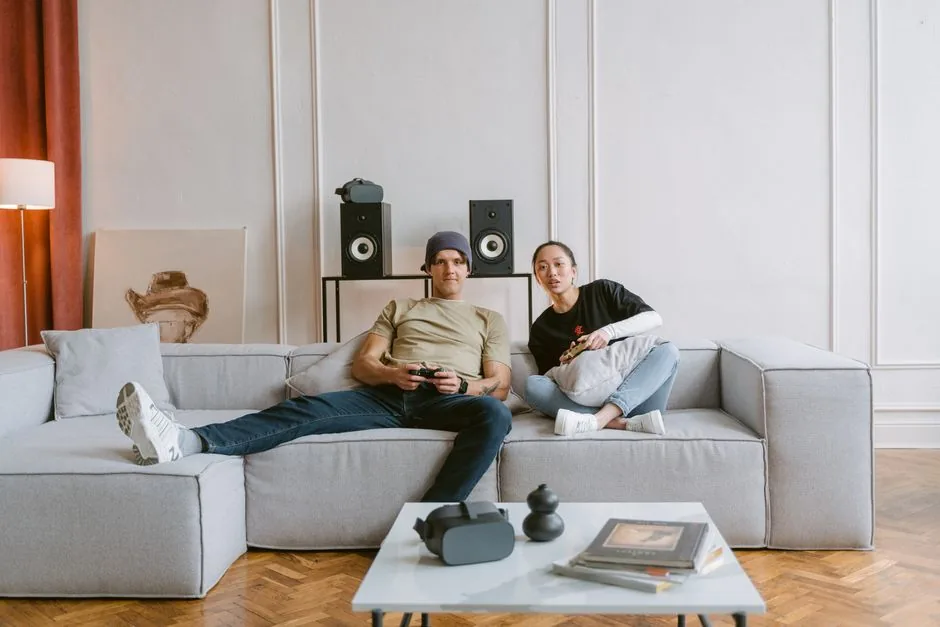
A 2.0 setup is two full-range speakers and nothing else. A 2.1 setup adds a separate subwoofer for the low frequencies that small satellite drivers cannot reproduce. The subwoofer is what gives explosions, engine rumbles, and film scores their physical weight.
For pure gaming, a good 2.0 pair is often enough — most game audio lives in the mid and treble ranges where footsteps and dialogue sit. If you also watch movies or play cinematic titles like Cyberpunk 2077 and God of War, a 2.1 setup like the Logitech Z407 or Razer Nommo V2 Pro is worth the extra money and the extra box under your desk. The subwoofer also frees the satellites from bass duty, which cleans up the midrange.
Connectivity and Where to Plug In
How you connect your speakers matters. USB speakers like the Creative Pebble Pro pull both power and signal over a single cable, which is ideal for a clean desk. The Edifier R1280DBs adds Bluetooth plus RCA and optical inputs, so you can run a console, a PC, and a phone through the same pair. If your motherboard audio is noisy, a dedicated DAC can clean up the signal — a topic we cover in the streaming and audio section of streaming setup for gaming.
For the cleanest signal path, prefer a digital connection (USB or optical) over the analog 3.5 mm jack, which can pick up electrical interference from inside your PC case.
Placement and Desk Setup Tips
Speaker placement changes the sound more than most people expect. The best gaming speakers still need to be positioned well:
- Ear height — angle the tweeters toward your ears, not your chest.
- Equal distance — keep both speakers the same distance from your head for a centered image.
- Away from the wall — rear-ported speakers need a few inches of clearance or the bass turns muddy.
- Off the same surface — isolate them from the desk with foam pads or small stands to cut resonance.
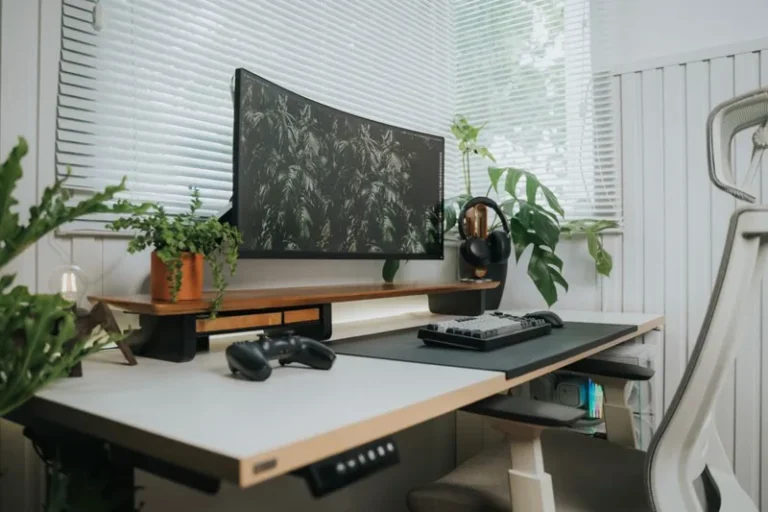
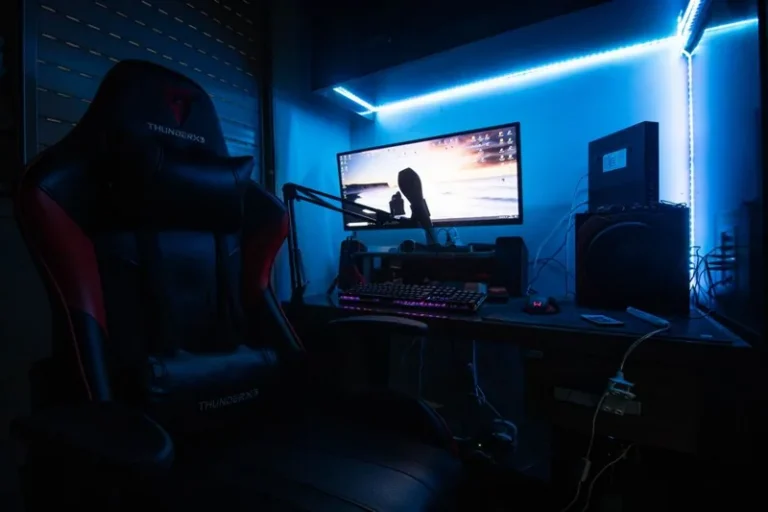
A tidy, well-positioned audio setup pairs naturally with a well-organized desk; our how to improve your gaming setup guide walks through the full layout.
Budget, Mid-Range, and Premium Picks
Under $60: the Creative Pebble Pro is the standout — surprisingly clear for its size and price, with a subtle, clean look that suits any desk. It will not shake the room, but it sounds far better than any monitor built-in speaker.
$80–$150: the Edifier R1280DBs and Logitech Z407 dominate. The Edifier wins on pure music quality, while the Z407 adds a subwoofer for gaming and movies. Either is a meaningful upgrade over stock audio.
$200+: the Razer Nommo V2 Pro and Audioengine A2+ target different buyers. The Nommo V2 Pro leans into immersive, bass-heavy gaming; the Audioengine A2+ is an audiophile-grade near-field pair for people who split time between games and music production.
How We Pick and Test the Best Gaming Speakers
Choosing the best gaming speakers means listening for three things: tonal balance, bass control, and clarity under pressure. A good pair should reproduce footsteps and dialogue without harshness during a three-hour session, keep explosions punchy rather than bloated, and stay composed at the volumes most players actually use. We favor near-field designs tuned for close listening distances, because those are the models that sound right on a desk rather than across a room.
Wattage is a misleading spec — a 100-watt system is not inherently better than a 30-watt system if the drivers are mediocre. What matters more is driver quality, cabinet tuning, and whether the speakers include a subwoofer. Independent measurements at RTINGS and hands-on comparisons at Tom’s Guide publish frequency-response graphs and real-world listening notes that make it easy to shortlist models before you buy. If you split your time between games and music, prioritize a neutral-sounding pair; if movies matter most, lean toward a 2.1 setup with a subwoofer.
FAQ
Are gaming speakers better than a gaming headset?
They serve different purposes. Speakers are more comfortable for long sessions and better for cinematic single-player games, while a headset offers positional accuracy and isolation for competitive play. Many players own both.
Do I need a subwoofer for gaming?
Not strictly. A quality 2.0 pair handles most game audio well. A subwoofer is worth it if you watch movies or want physical impact from explosions and cinematic soundtracks.
Can I use the best gaming speakers with a console?
Yes. Models with HDMI ARC, optical, or Bluetooth inputs work with consoles and TVs as easily as with a PC. Check the inputs before you buy.
How do I reduce speaker hiss at high volume?
Use a digital connection (USB or optical), keep speaker cables away from power cables, and lower the PC’s output volume while raising the speaker’s own volume slightly to keep the signal-to-noise ratio high.
Conclusion
The best gaming speakers of 2026 prove you do not need a huge budget for great desktop sound. The Edifier R1280DBs is our all-around pick for its warm, detailed output and flexible inputs, while the Creative Pebble Pro covers tight budgets and the Razer Nommo V2 Pro delivers the bass-heavy immersion movie-style games deserve. Match your choice to how you play — competitive shooters lean toward a headset, but for everything else, a good pair of speakers transforms the experience. For more desk upgrades, see best gaming monitor 2026 and best gaming keyboard 2026.