How Much Does It Cost to Build a Gaming PC in 2026?
Choosing to build instead of buy comes down to a single question: how much does it cost to build a gaming PC? The honest answer is that a capable 1080p machine starts around $650 to $800, a strong 1440p build lands between $1,000 and $1,400, and a high-refresh 4K rig pushes past $2,000 before you add a monitor, keyboard, and mouse. The spread is wide because parts scale, but the numbers are predictable once you know where the money actually goes.
In 2026, mid-range hardware is genuinely good. An RTX 5060 Ti or AMD RX 9070 paired with a Ryzen 5 9600X will run nearly every major title at 1440p on high settings. It no longer takes a flagship card to get there, and the prices below reflect real street pricing you can check today rather than launch MSRPs.
What Determines How Much It Costs to Build a Gaming PC?
Three decisions set most of your total. The graphics card is the biggest line item, typically 35% to 45% of the whole budget. The CPU and motherboard come next, followed by memory, storage, and power. Every other part is cheaper by comparison, but they add up fast.
Your target resolution matters more than your total budget. A PC built for 1080p esports at high refresh rates needs a far cheaper GPU than a 4K machine that has to push four times the pixels. Decide the resolution first, then let the parts follow. For most people, 1440p is the sweet spot where performance and cost stop fighting each other.
Gaming PC Cost by Performance Tier
Here is what a complete tower costs in 2026, excluding monitor and peripherals. These ranges assume you build it yourself and shop current street prices rather than paying a prebuilt markup.
| Performance tier | Target resolution | Typical GPU | Total tower cost |
|---|---|---|---|
| Budget | 1080p, 60-144 fps | RTX 5060 or RX 9060 XT | $650 – $800 |
| Mid-range | 1440p, 100+ fps | RTX 5060 Ti or RX 9070 | $1,000 – $1,400 |
| Enthusiast | 1440p ultra / 4K entry | RTX 5070 Ti or RX 9070 XT | $1,500 – $2,000 |
| High-end | 4K, high refresh | RTX 5080 or RTX 5090 | $2,200 – $3,500+ |
A realistic 1440p build in 2026 lands around $1,200 when you pick parts carefully. That system will play Cyberpunk 2077, Call of Duty, and Elden Ring at high settings without breaking a sweat. Spending more mostly buys higher frame rates at 4K rather than a fundamentally different experience.
Component-by-Component Cost Breakdown
Understanding how much does it cost to build a gaming pc means seeing where every dollar lands. Here is a practical allocation for a solid mid-range tower.
- Graphics card: $350 to $750. This is the engine. Aim to spend roughly 40% of your budget here, since it determines frame rates more than anything else.
- CPU: $180 to $350. A Ryzen 5 9600X ($250) or Core Ultra 5 245K ($300) is plenty for gaming. Anything above that is for streaming, editing, or heavy simulation games.
- Motherboard: $140 to $220. A B850 board gives you DDR5 support, PCIe 5.0 storage, and solid power delivery without the overclocking tax of X870E.
- Memory: $80 to $120 for 32GB of DDR5-6000. This is the 2026 sweet spot. Sixteen gigabytes is now the floor, and 32GB costs barely $30 more.
- Storage: $60 to $140 for a 1TB or 2TB PCIe 4.0 NVMe drive. A 2TB drive at around $110 removes the need to uninstall games every month.
- Power supply: $80 to $130 for a 750W to 850W 80 Plus Gold unit. Never cheap out here; a bad PSU can damage every other component.
- Case: $60 to $120. Airflow and easy cable management matter more than looks.
- CPU cooler: $35 to $90. A tower air cooler handles mid-range CPUs; an AIO only makes sense for high-end chips.
Add those up for a mid-range build and you land right in that $1,100 to $1,300 window. It is not magic; it is math.
Hidden Costs People Forget
Most first-time builders price the tower and stop there, then get surprised. A decent 1440p gaming monitor runs $200 to $350 on its own. A mechanical keyboard, gaming mouse, and headset add another $150 to $300 combined.
Windows 11 Home costs about $140 for a retail license, though you can run it unactivated at first and buy a key later. Thermal paste, extra case fans, and a screwdriver set add $30 to $60. If you are starting from zero, a realistic “first PC including everything” budget is roughly $1,500 to $1,800 even when the tower alone was $1,200. That total is why asking how much does it cost to build a gaming pc without budgeting for a monitor and peripherals leads people to undershoot by a few hundred dollars.
How to Lower the Cost Without Losing Performance
You do not have to pay sticker price on every part. Sales rotate constantly, and GPUs in particular dip $50 to $100 below MSRP a few months after launch. Track prices for a week or two before you buy.
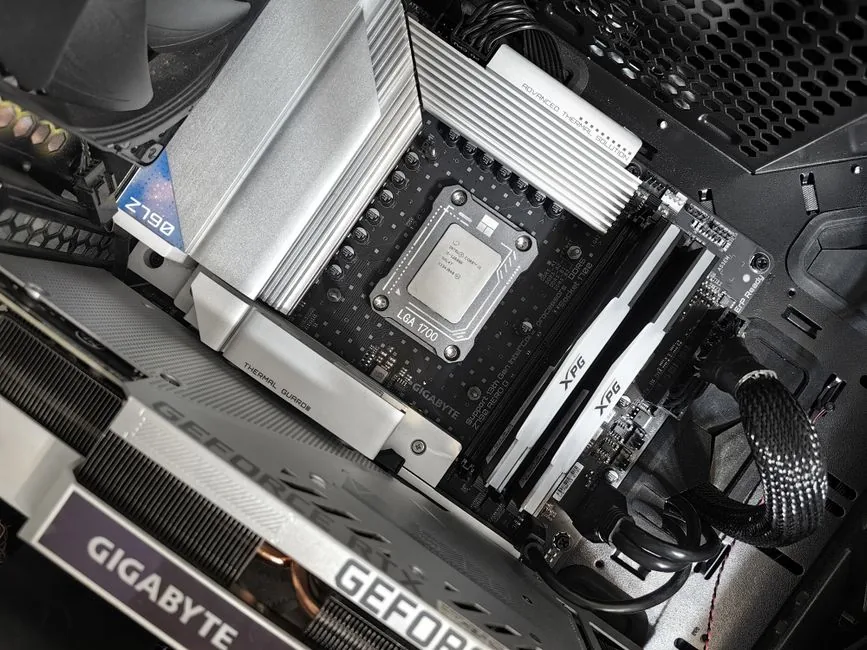
Three moves save the most money. Buy the previous-generation GPU if the current one is overpriced, since an RX 7800 XT still handles 1440p beautifully. Skip RGB and tempered glass to drop $40 from the case budget. And reuse any part you can, especially a case, power supply, or storage drive from an older machine.
Should You Build or Buy for the Same Money?
A custom build at $1,200 routinely beats a $1,400 prebuilt in both performance and part quality. Prebuilts charge for assembly and often skimp on the power supply, motherboard, and cooler to hit a price point. If you are willing to spend two or three hours assembling, building nearly always extracts more performance per dollar, and once you set a budget, how much does it cost to build a gaming pc is simply the sum of the parts you picked.
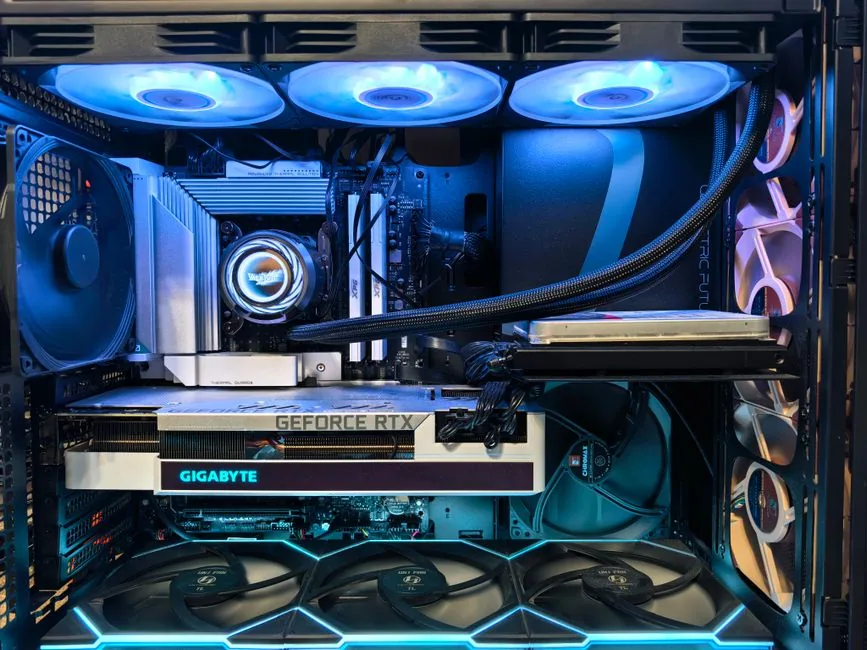
That said, prebuilts have their place when you want a warranty and zero assembly risk. For a fuller comparison of the two routes, see our guide to prebuilt vs custom gaming pc. If you are leaning toward building yourself, start with the step-by-step walkthrough in gaming pc build how to.
How 2026 Prices Compare to Past Years
Building has never been a better value, and the trend lines explain why. DDR5 memory, which carried a painful early-adopter premium in 2022 and 2023, is now mainstream and cheap. Thirty-two gigabytes of DDR5-6000 sells for around $90 to $110, roughly half what the same capacity cost two years ago.
SSD prices have fallen even faster. A 2TB PCIe 4.0 drive that ran about $180 in 2023 now costs $110 to $130, which is why two-terabyte drives are the default recommendation instead of a luxury. Combine those two, and $1,000 in 2026 buys roughly the same real-world gaming performance that $1,400 bought in 2024.
The one exception is the flagship GPU. The RTX 5090 and its predecessors keep creeping upward, so the very top of the market costs more than ever. The mid-range, though, is where the value lives, and it has genuinely improved. An RTX 5070 Ti now delivers entry-4K performance for about what a mid-range card used to cost.
That mid-range improvement matters more than any spec sheet. It means the answer to how much does it cost to build a gaming pc keeps getting friendlier for the average builder, even as headlines focus on $2,000 flagship cards most people will never buy.
Frequently Asked Questions
How much does it cost to build a gaming PC for 1080p?
A 1080p build costs $650 to $800 in 2026 with an RTX 5060 or RX 9060 XT and a Ryzen 5 or Core Ultra 5 CPU. That runs esports titles at 144 fps and AAA games at 60 fps or more on high settings.
Is it cheaper to build a gaming PC or buy a prebuilt?
Building is almost always cheaper for the same performance level, usually by $100 to $300. Prebuilts add assembly cost and often use lower-quality power supplies and motherboards to protect their margins.
How much does a 4K gaming PC cost to build?
Expect $2,200 and up. You need an RTX 5080 or RTX 5090, a strong CPU like the Ryzen 7 9800X3D, and a quality 850W power supply. The GPU alone is normally $1,000 to $2,000.
Do I need to buy Windows separately?
Yes, unless you transfer an existing license. Windows 11 Home costs about $140 retail, though you can install and run it unactivated to start and activate later.
What is the best budget for a first gaming PC?
$1,000 to $1,200 gets you a complete, room-to-grow 1440p system, which is the best value point in 2026. Spending under that means 1080p, and that is still a great experience for the money.
Ready to Price Your Build?
Now you have a real answer to how much does it cost to build a gaming pc, and it is less scary than the marketing suggests. Start with a parts list, check current prices, and let the resolution you play at decide the GPU. For a concrete parts list under a strict ceiling, see our best budget gaming pc build under 1000 guide, or jump to best gaming pc build 2026 for the highest-value components this year. Sites like Tom’s Hardware and PC Gamer publish updated benchmark and pricing data worth checking before you buy.