VR Headset for PC Gaming 2026: Best Picks, Specs & Buying Guide
If you are shopping for a VR headset for PC gaming 2026, you now have more capable options than ever, and a few clear winners depending on your budget and GPU. This guide breaks down resolution, refresh rate, tracking, and comfort so you can match the right headset to your rig. We compared the Meta Quest 3, PlayStation VR2 with its PC adapter, Valve Index, and the newest mixed-reality headsets so you do not sink money into the wrong hardware.
Before you buy anything, understand that a VR headset for PC gaming 2026 is only as good as the graphics card and CPU behind it. If you are still deciding on the rest of your build, check our guide to the best graphics card for gaming 2026 and the best CPU for gaming 2026 first, because VR is far more GPU-bound than flat-screen gaming.
What to Look for in a VR Headset for PC Gaming 2026
Four specs decide whether a VR headset for PC gaming 2026 feels immersive or nauseating: resolution, refresh rate, tracking method, and lenses. In 2026, the baseline you should accept is at least 2,000 x 2,000 pixels per eye and a 90 Hz refresh rate. Anything lower introduces visible screen-door effect and motion blur in fast titles.
Pancake lenses have largely replaced Fresnel lenses on new models, which means a smaller sweet spot but far less glare. Inside-out tracking through onboard cameras is now the standard, so you no longer need external base stations for most headsets, although lighthouse tracking on the Valve Index still offers the most precise controller accuracy for competitive play.
Best VR Headset for PC Gaming 2026: Top Models Compared
Here is how the leading headsets stack up for the mid-2026 market. Prices reflect typical US street pricing at the time of writing.
| Headset | Resolution (per eye) | Refresh Rate | Tracking | Price (USD) |
|---|---|---|---|---|
| Meta Quest 3 | 2064 x 2208 | 90/120 Hz | Inside-out | $499 |
| PlayStation VR2 + PC Adapter | 2000 x 2040 | 90/120 Hz | Inside-out | $549 + $59 |
| Valve Index | 1440 x 1600 | 80/144 Hz | Lighthouse | $999 |
| Pimax Crystal Light | 2880 x 2880 | 90/120 Hz | Inside-out | $799 |
| Bigscreen Beyond | 2560 x 2560 | 90 Hz | Lighthouse | $999 |
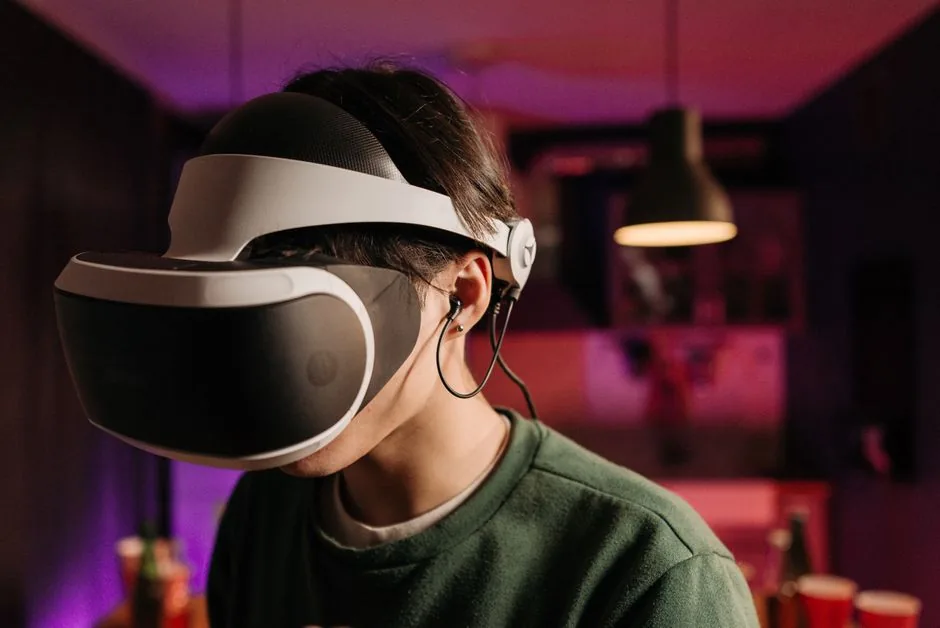
If you want the best all-rounder, the Meta Quest 3 is the default recommendation for a VR headset for PC gaming 2026. It works wireless through Air Link or wired over USB-C, has a huge mixed-reality software library, and no longer requires a Facebook account to use on PC. The PlayStation VR2, when paired with its official PC adapter, delivers outstanding OLED contrast and HDR, though the adapter cable management is still clunky.
Specs and PC Requirements for VR in 2026
PC VR demands a stable 90 FPS at the headset’s full resolution, which is roughly equivalent to gaming at 4K. A current-generation mid-range GPU such as the NVIDIA GeForce RTX 5070 or AMD Radeon RX 9070 is the practical entry point for smooth modern titles, while the RTX 5090 or RX 9090 XT is what you want to push 120 Hz on the Pimax Crystal Light.
You will also want a fast NVMe SSD and at least 32 GB of memory for the largest VR titles like Half-Life: Alyx and flight simulators. Independent GPU benchmarks from Tom’s Hardware and PC Gamer consistently place the RTX 5070 class as the practical VR sweet spot for 2026, so you do not need a flagship card to enjoy most headsets. Our how much RAM for gaming PC and best NVMe SSD for gaming guides cover exactly how much headroom to leave. A quality PSU matters too, which we cover in the best power supply for gaming PC roundup.
Resolution, Brightness, and Why It Actually Matters
Raw resolution is not the whole story. OLED panels like the one in the PSVR2 deliver deep blacks and vivid colors that LCD panels struggle to match, which makes horror and space titles feel dramatically more convincing. LCD headsets like the Quest 3 win on sharpness per dollar and have no mura, but blacks look gray in dark scenes.
Brightness matters because pancake lenses soak up part of the light output. The Pimax Crystal Light, despite its enormous resolution, dims noticeably at the edges, while the Quest 3 holds a bright, even picture across the panel. For most people, a VR headset for PC gaming 2026 with a bright, high-uniformity LCD is more pleasant to use for hours than a dimmer OLED with higher contrast.
Tracking, Controllers, and Long-Session Comfort
Comfort is where many headsets fail after the first hour. The front-heavy Quest 3 benefits hugely from an aftermarket strap with a rear battery, while the Bigscreen Beyond, at just 127 grams, is the most comfortable headset ever made but requires a custom face scan and external base stations.
Controller tracking on inside-out systems is now accurate to a few millimeters and still performs well when your hands briefly leave the camera view. For extended competitive play in titles like Beat Saber and shooters, lighthouse tracking remains the gold standard, which is why the Valve Index and Bigscreen Beyond hold their value for enthusiasts building a dedicated VR room.
One more practical note: a stable Wi-Fi 6 router matters if you plan to stream wirelessly. The latest headsets like the Quest 3 handle Air Link well, but a congested 2.4 GHz band will introduce visible compression and lag, so wire the PC to the router with Ethernet whenever possible.
Budget vs Premium: Which VR Headset for PC Gaming 2026 Fits You
Your choice finally comes down to how you intend to use the headset and how much GPU you already own.
- Under $600, wireless-first: Meta Quest 3 is the obvious pick.
- Best visual contrast on a budget: PSVR2 plus the PC adapter, if you can accept the cable.
- Maximum resolution for simulators: Pimax Crystal Light, provided your GPU is a top-tier card.
- Enthusiast room-scale: Valve Index or Bigscreen Beyond with base stations.
There is no single perfect VR headset for PC gaming 2026 for everyone. If you mostly sim-race or fly, resolution and brightness win. If you play active room-scale games, tracking and comfort matter more. Lock in your GPU budget first, then let the headset be the last part of the equation.
FAQ
Does a VR headset for PC gaming 2026 still need a powerful PC?
Yes. You need a current-generation mid-range or better GPU to hold a smooth 90 FPS at full headset resolution. Check the headset’s system requirements before you buy.
Can I use the Meta Quest 3 wirelessly on PC?
Yes. Air Link and Virtual Desktop both stream PC VR over Wi-Fi 6, and the experience is nearly indistinguishable from a wired USB-C connection with a good router.
Is the PlayStation VR2 worth it for PC players?
If you value OLED contrast and HDR and already own a capable GPU, the PC adapter makes it a strong pick, although the cable management and software quirks are still real.
Do I need base stations in 2026?
Only for lighthouse headsets like the Valve Index and Bigscreen Beyond. Most modern headsets use inside-out tracking with onboard cameras.
How much should I spend on a VR headset for PC gaming 2026?
Between $499 and $999 is the sweet spot. Spending more than that on a headset only makes sense if you are a hardcore simulator enthusiast with a flagship GPU.
Conclusion
The VR headset for PC gaming 2026 market has matured to the point where almost any mid-tier headset is genuinely good, and the real differentiators are display type, comfort, and your existing PC. Buy your GPU and CPU first, pick a headset that matches your play style, and you will have an immersive setup that lasts for years. Start with our best gaming PC build 2026 guide to make sure your whole rig is VR-ready before you commit to a headset.