Are Liquid Cooled Computers Better? Liquid vs Air Cooling Compared
It is one of the most common questions in PC building, and the answer is more conditional than most people expect. Are liquid cooled computers better than air cooled ones? Sometimes yes, sometimes no, depending on what “better” means to you and which processor is underneath the cooler.
Liquid cooling genuinely wins on peak thermal performance and noise under heavy load, while air cooling wins on price, simplicity, and long-term reliability. This guide breaks the comparison into the categories that actually matter so you can decide without the marketing hype.
What “Better” Actually Means
Before comparing, it helps to define better. A cooler can be judged on four independent things: how cold it keeps the CPU, how loud it is doing it, how much it costs, and how likely it is to fail. The two cooling methods do not win the same categories.
Simply put, liquid beats air on absolute temperature and load noise at the high end, while air beats liquid on cost and reliability at every level. There is no single winner, which is why the honest answer depends on the use case.
Are Liquid Cooled Computers Better on Temperature?
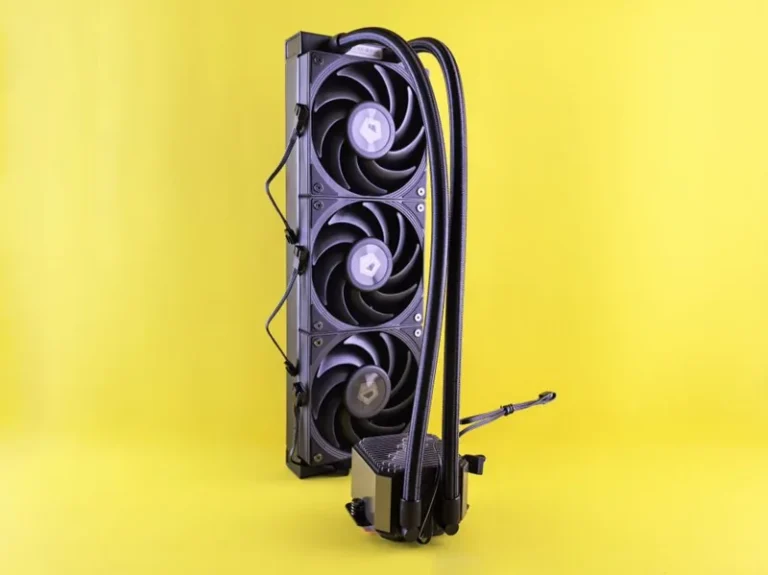
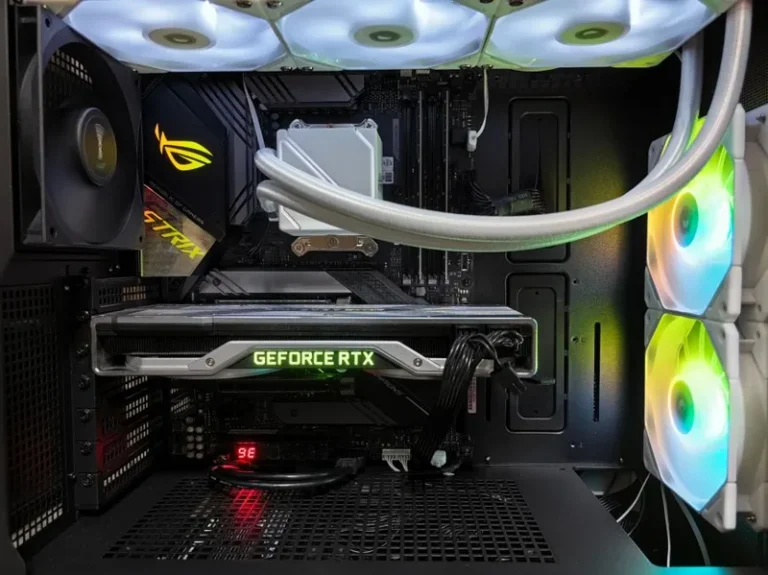
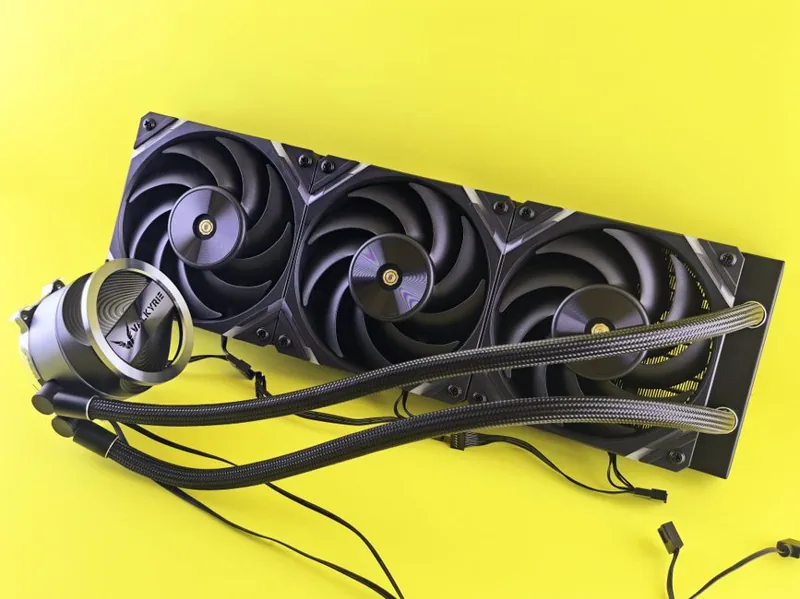
When both are running at full tilt on a flagship processor, a 360mm AIO holds lower temperatures than even the best large air cooler. The ocean of radiator surface area simply sheds heat faster, and because liquid transports heat away from the CPU more efficiently, the cold plate stays tighter to the chip.
| Metric | High-End Air (NH-D15) | 360mm AIO | Winner |
|---|---|---|---|
| Peak cooling capacity | ~250W comfortable | ~280W+ comfortable | Liquid |
| Ryzen 9 / Core i9 load temp | ~85°C | ~72°C | Liquid |
| Ryzen 5 / Core i5 load temp | ~65°C | ~60°C | Tie |
| Noise under load | Louder fans | Quieter | Liquid |
| Price | ~$120 | ~$120–$300 | Air (at low end) |
| Points of failure | Fan only | Fan + pump | Air |
The table tells the story. On a midrange chip, air and liquid are close enough that the difference is academic. On a flagship chip, liquid cooling delivers a genuinely cooler and quieter machine — the one place where liquid cooling gets a clear yes.
Noise: Liquid Is Quieter Under Load, Air Quieter at Idle
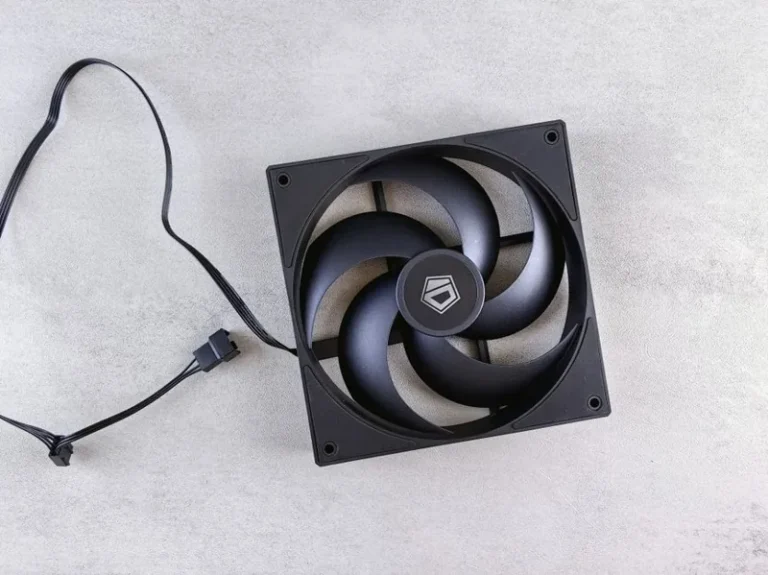
At idle, a big air cooler can be effectively silent because its fan barely needs to spin. Under sustained load, though, that same air cooler has to spin harder to dump heat, while a large AIO spreads the same heat across three slow-spinning fans and stays noticeably quieter.
If you are the kind of person who games with speakers or does not mind a whoosh, the difference does not matter much. If you want the quietest possible rig, liquid cooling and a quietest pc build approach go hand in hand.
Reliability: Air Wins, and It Is Not Close
An air cooler is a chunk of metal with a fan on it. The worst failure it can suffer is a dead fan, which is a $15 fix and easy to spot. Nothing leaks, nothing wears out beyond the fan bearing, and a good air cooler can easily last a decade across multiple builds.
A liquid cooler adds a pump and a sealed fluid loop. Modern AIOs are well built and rarely fail, but the pump is still a single point of failure, and when it dies the whole unit is replaced. Custom loops add user-installed fittings, which introduce the possibility of a genuine, system-killing leak.
For a machine you want to set up and forget, air cooling is the lower-risk choice. This reliability argument is the main reason many experienced builders still answer “not for me.”
Cost: Air Punches Far Above Its Weight
This is where the comparison is most lopsided. A $40 Thermalright Peerless Assassin cools a midrange CPU as well as coolers three times its price, and a $120 Noctua NH-D15 competes with AIOs in the same bracket.
Liquid cooling starts being worth the premium only at the flagship end. Unless you run a Ryzen 9, Core Ultra 9, or a heavily overclocked chip, the extra $50 to $150 an AIO costs would almost always do more for your build as a faster GPU or a larger SSD. For a full breakdown of those trade-offs, see our best CPU cooler 2026 list.
Real Builds Compared: Air vs Liquid on a Budget
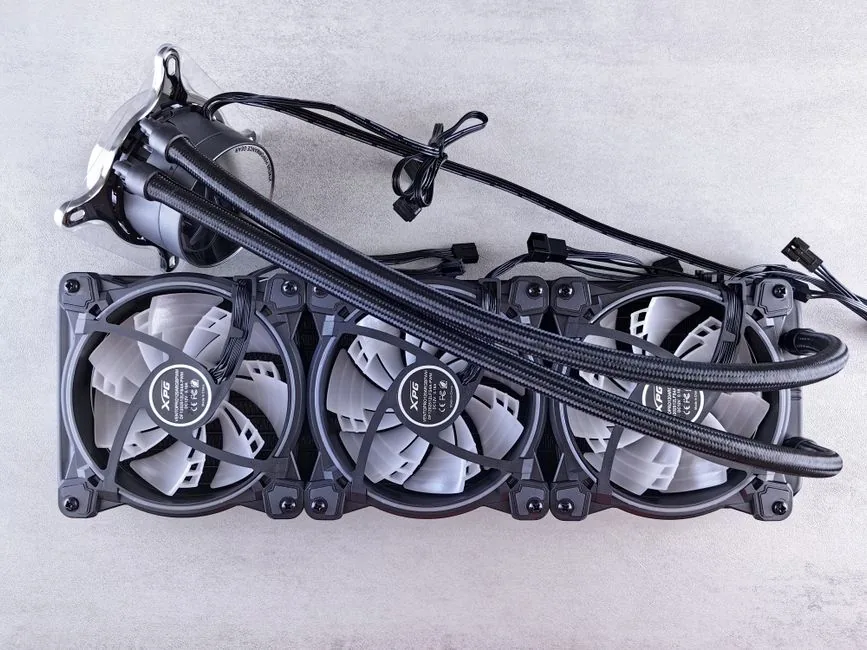
To make the abstract comparison concrete, look at two realistic 2026 builds. A midrange machine around a Ryzen 7 9800X3D does not need water at all. A $40 Thermalright Peerless Assassin 120 SE keeps that chip in the low 70s under an all-core gaming load, and the whole machine is effectively silent at idle. Stepping up to a 360 mm AIO drops the same chip into the high 60s — a real but marginal gain that changes nothing about frame rates.
The story flips at the flagship end. A Ryzen 9 9950X3D under sustained rendering or production load sits right at the thermal limit on a large air cooler and gives up some boost clock, while a 360 mm AIO holds it comfortably in the 70s and lets it hold peak clocks. That is the honest dividing line: liquid cooling earns its keep on chips that genuinely overwhelm air cooling, and it is mostly a stylistic choice everywhere else.
This is also why prebuilt makers pair 360 mm AIOs with their flagship SKUs while shipping their midrange towers with air coolers. The cooling type follows the CPU’s heat output, not the brand’s taste.
Cases, Clearance, and the Real Decider
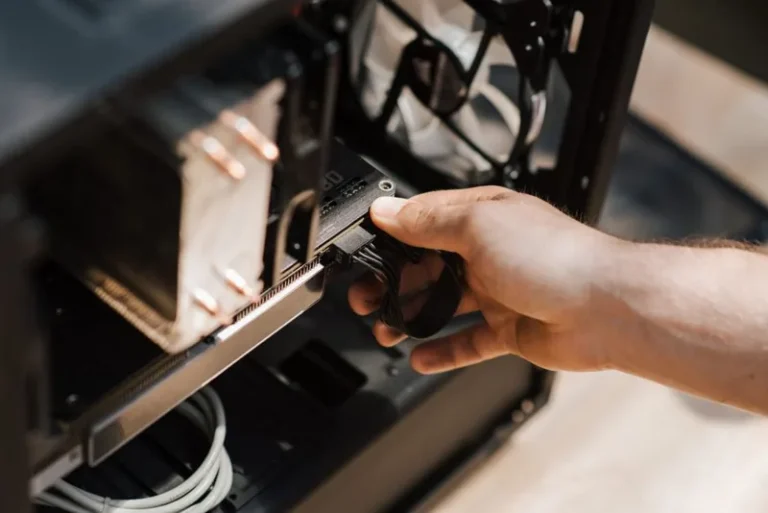
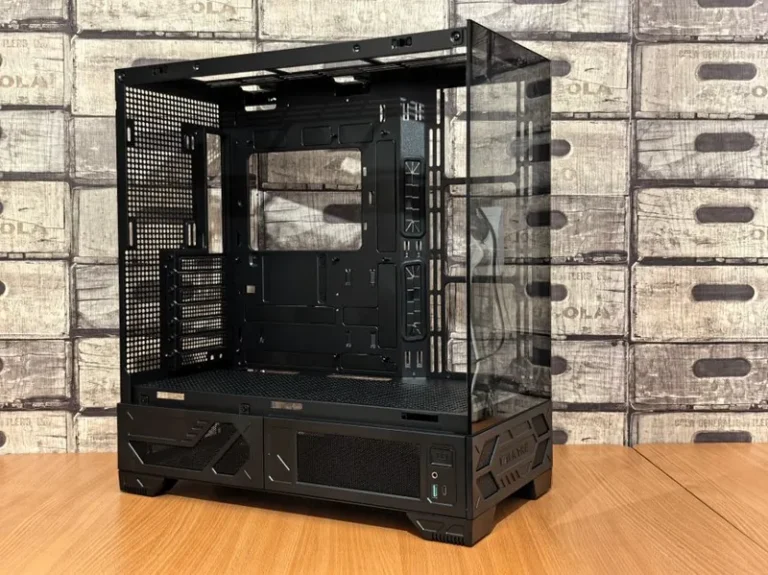
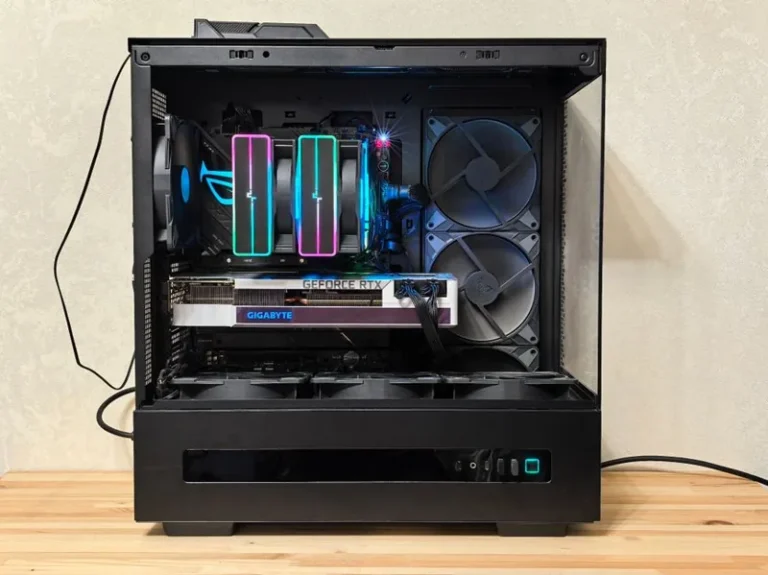
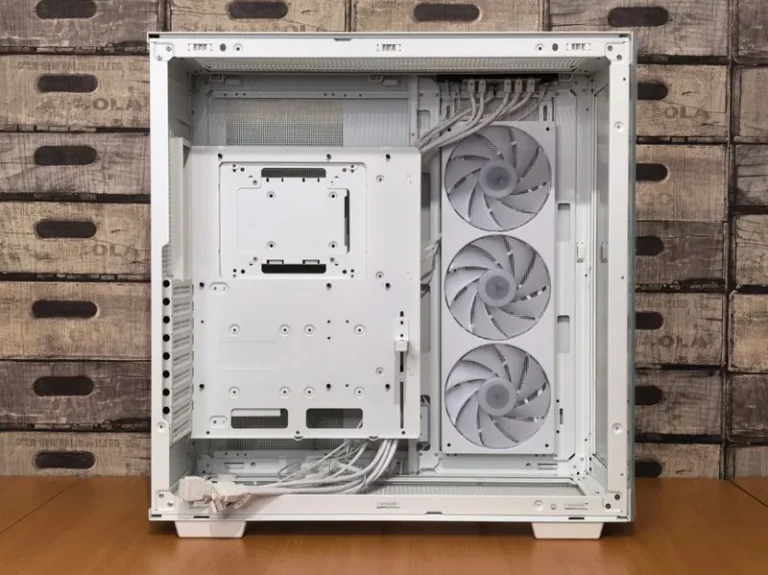
Cooling choice is not made in a vacuum. Compact Mini-ITX cases often cannot fit a tall tower air cooler at all, which forces the builder toward a 240mm AIO by default. Conversely, a wide tower with great airflow and a best airflow PC case design may never need liquid cooling for a midrange chip.
The practical rule is: fit the cooler to the case and the CPU together. A flagship chip in a small case wants an AIO. A midrange chip in a roomy mesh tower is perfectly happy on air.
Which Builds Should Actually Go Liquid
Liquid cooling is the better choice when you build around a high-TDP flagship, overclock, chase low noise, or work inside a compact chassis. It is the wrong purchase when you are on a fixed budget, since every dollar not spent on cooling can go toward components that raise frame rates.
A full liquid cooled gaming pc is a luxury that occasionally earns its keep, while air cooling is the dependable default. If you are still torn, the AIO vs air cooler guide walks through specific models and measured temperatures.
FAQ
Are liquid-cooled PCs better than air-cooled ones?
For flagship CPUs and overclocking, yes — they run cooler and quieter under load. For midrange chips, air coolers are equal or close in real-world use and more reliable.
Is liquid cooling safer than air cooling?
No. Air cooling has fewer points of failure, while liquid cooling adds a pump and, in custom loops, fittings that could leak.
Do liquid cooled PCs last longer?
Not because of the cooling. Air coolers actually outlast AIOs on average, though both can keep a CPU healthy for years when temperatures stay in check.
Can a liquid cooled PC overheat?
Yes, if the radiator is clogged, the fans fail, or the pump dies. Monitoring coolant or CPU temperature catches these problems early.
What is cheaper, air or liquid cooling?
Air is almost always cheaper. A $40 air cooler rivals a $120 AIO on midrange CPUs, and the savings are better spent on a faster GPU.
Conclusion
Liquid-cooled machines are better at the top end — cooler and quieter on flagship hardware — while air cooling is better on price and reliability everywhere else. Match the cooler to your CPU and case, and you will land on the right answer without overspending.
For independent, measurement-driven testing, Gamers Nexus and PC Gamer are the sources I trust. When you are ready to plan the whole machine, start from our best gaming PC build 2026 and best CPU for gaming 2026 guides.