Best Gaming TV 2026: Top Picks for Consoles and PC
The best gaming tv 2026 market has settled into a clear hierarchy, and the decision now comes down to panel type, HDMI 2.1 support, and how much you are willing to spend. Modern consoles like the PlayStation 5 Pro and Xbox Series X push 4K at 120Hz, which means a genuine gaming TV needs full-bandwidth HDMI 2.1, variable refresh rate (VRR), and low input lag in the 5–10ms range. Whether you are couch gaming on a console or running a high-end PC into a 55-inch display, this guide ranks the top options across every budget and explains exactly what separates a great gaming TV from an average one.
Before narrowing to a single model, it helps to understand what actually matters for gaming. Input lag, motion handling, and VRR are the specs that decide whether a game feels responsive or soupy, and they matter far more than marketing buzzwords about “AI upscaling” or peak brightness. For the full picture of how a TV compares to a dedicated display, see our best gaming monitor 2026 guide, which covers the monitor side of the same decision.
What to Look For in a Gaming TV
Four specifications separate a proper gaming TV from a regular living-room set. First is HDMI 2.1 bandwidth. You need at least two full-bandwidth 48Gbps ports to run 4K at 120Hz with 10-bit color, and the best 2026 models offer four. Second is input lag, measured in milliseconds — anything under 10ms is invisible to all but the most sensitive players, and the top picks sit between 5ms and 8ms in game mode.
Third is variable refresh rate, which locks your TV’s refresh to the console’s frame rate to eliminate screen tearing and stutter. Look for support for both AMD FreeSync Premium and, where available, NVIDIA G-Sync. Fourth is panel technology. OLED delivers perfect blacks and instant response but can be dim in bright rooms, while mini-LED offers far more peak brightness and better HDR pop at the cost of slightly slower pixel response. Independent testers like RTINGS publish measured input lag and response-time numbers for every model, which is worth checking before you commit.
The Best Gaming TVs of 2026
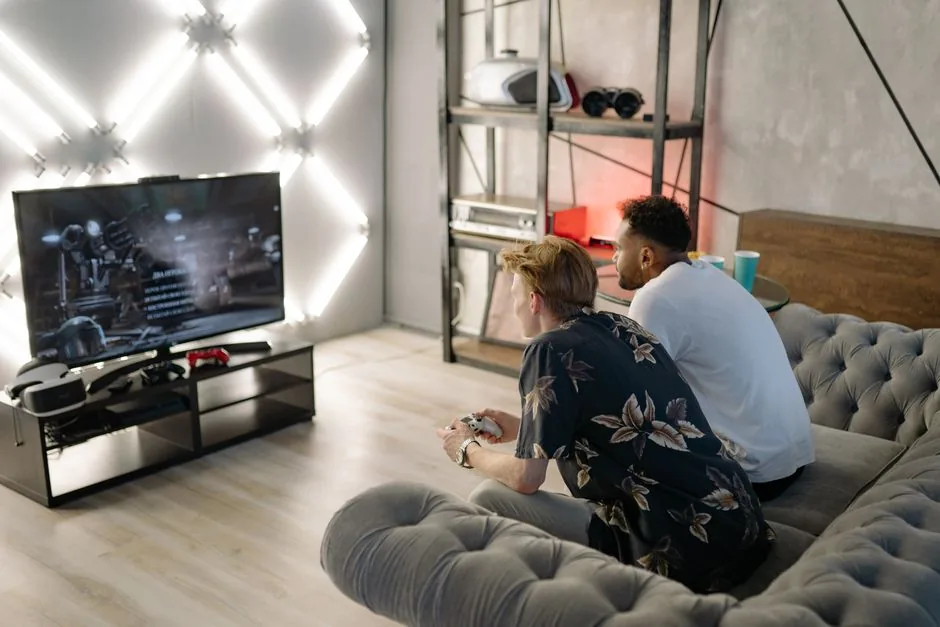
Here are the top TVs we recommend this year, tested across picture quality, input lag, and gaming features.
| Rank | TV | Panel | Gaming Highlight | 2026 Price (USD) |
|---|---|---|---|---|
| 1 | LG C5 OLED | OLED evo | 4x full HDMI 2.1, 5.8ms lag | $1,499 |
| 2 | Samsung S95F | QD-OLED | 144Hz, brightest OLED | $1,799 |
| 3 | Sony Bravia 9 | Mini-LED | Best HDR pop + motion | $1,999 |
| 4 | Samsung QN90F | Mini-LED | Anti-glare, bright rooms | $1,299 |
| 5 | TCL QM7K | Mini-LED | Best value 120Hz | $799 |
| 6 | Hisense U8N | Mini-LED | Budget brightness king | $949 |
The LG C5 OLED remains our overall pick for the best gaming tv 2026. It pairs four full-bandwidth HDMI 2.1 ports with a measured 5.8ms input lag, perfect blacks, and near-instant pixel response, which makes fast motion in shooters and racing games look cleaner than on nearly anything else. The Samsung S95F adds a 144Hz max refresh rate and the brightest QD-OLED picture on the market, making it the better buy for very bright living rooms or PC users who want every last frame.
OLED vs Mini-LED: Which Panel Should You Choose?
The biggest fork in the road is OLED versus mini-LED, and each has a clear set of trade-offs. OLED wins on contrast and response time: every pixel self-illuminates, so blacks are truly black and there is zero backlight blooming around bright objects. That makes it unbeatable for dark-room horror games, space titles, and any game with lots of black scenes.
Mini-LED, by contrast, uses thousands of tiny backlight zones to approach OLED contrast while delivering far more peak brightness — often 2,000 to 3,000 nits versus OLED’s 1,000 to 1,500. If you game in a bright room with big windows, mini-LED is the wiser choice because it fights glare and holds HDR detail better. Burn-in, once a real OLED concern, is largely a non-issue in 2026 thanks to improved panel cooling and pixel-shift tech, but heavy static-HUD players may still prefer mini-LED for total peace of mind.
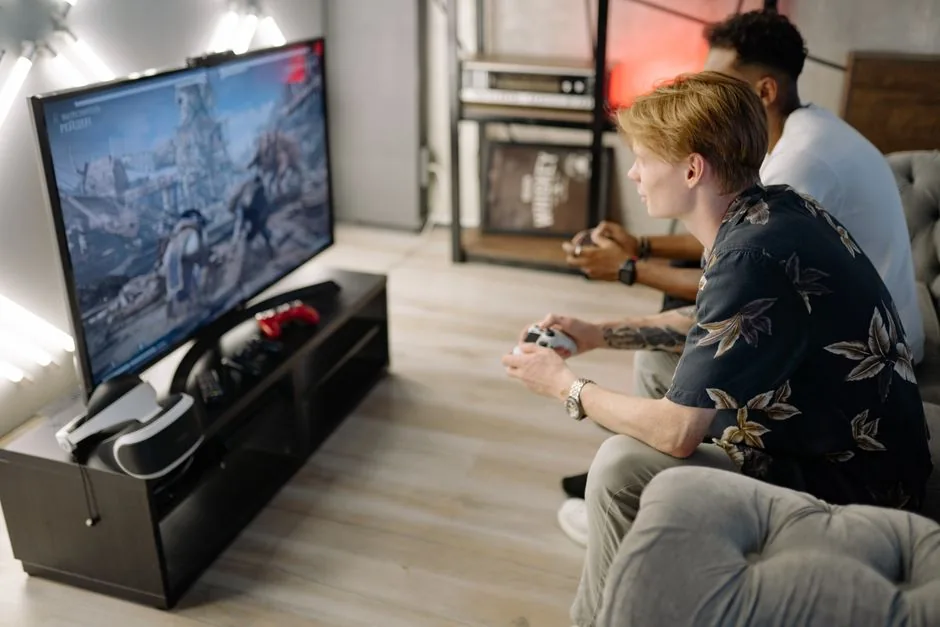
Our advice is simple: dark room equals OLED, bright room equals mini-LED. Both technologies now deliver the 4K 120Hz and VRR you need, so you cannot make a truly wrong choice — only a suboptimal one for your lighting situation.
Size and Seating Distance
Screen size matters as much as panel type for immersive gaming. The rule of thumb is that a TV should fill roughly 30 to 40 degrees of your field of view from where you sit. For a 4K panel, you can sit closer than the old 1080p guidelines suggested, because the higher resolution hides the pixel structure even at short distances.
A practical guide: a 55-inch TV works well at 6 to 8 feet, a 65-inch at 7.5 to 10 feet, and a 77-inch or larger at 9 feet and beyond. If you also plan to use the screen for split-screen or co-op play, err larger — the extra size makes each player’s window far more readable. For a couch setup, our dual monitor setup for gaming guide is less relevant, but if you are also building a desk PC, it covers the complementary decision.
Gaming Features That Actually Matter
Beyond the headline specs, three features make day-to-day gaming better. Auto Low Latency Mode (ALLM) automatically switches the TV into game mode when a console boots, dropping input lag without you touching a setting. HGiG tone mapping correctly displays HDR games the way developers intend, avoiding the washed-out or over-dark image you get when the TV applies its own tone curve on top.
eARC is the sleeper pick for anyone with a soundbar or AV receiver, routing uncompressed, lag-free audio from the TV back to your audio gear. Most 2026 gaming TVs include all three by default, but confirm eARC is on the port you plan to use. For console players wondering how the whole living-room experience stacks up against a desktop, our console vs PC gaming breakdown walks through the trade-offs.
FAQ
What is the best gaming tv 2026 for PS5 and Xbox?
The LG C5 OLED is our top recommendation for both the PlayStation 5 Pro and Xbox Series X. It offers four full-bandwidth HDMI 2.1 ports, VRR, ALLM, and measured input lag under 6ms, so you get the full 4K 120Hz experience out of either console.
Is OLED or mini-LED better for gaming?
OLED is better for dark rooms thanks to perfect blacks and instant pixel response, while mini-LED is better for bright rooms because of its higher peak brightness. In 2026 both are excellent, so the choice comes down to your lighting conditions and burn-in tolerance.
Do I need HDMI 2.1 for gaming?
Yes, if you want 4K at 120Hz with 10-bit color and VRR. HDMI 2.0 tops out at 4K 60Hz, so any modern console or high-refresh PC setup should pair with a TV that has at least two full-bandwidth HDMI 2.1 ports.
What size gaming TV should I buy?
A 55-inch TV suits 6 to 8 feet of viewing distance, a 65-inch suits 7.5 to 10 feet, and 77 inches or larger works best beyond 9 feet. Choose the largest size that fits your budget and room for the most immersive experience.
Is a gaming TV better than a gaming monitor?
For couch play and cinematic single-player games, a gaming TV gives you more screen size and better HDR for the money. A monitor wins for competitive esports on a desk, with smaller sizes favoring faster pixel response and higher refresh rates. See our best gaming monitor 2026 guide for that side of the decision.
Conclusion
The best gaming tv 2026 for most people is the LG C5 OLED, which nails the core gaming specs — 4K 120Hz, four HDMI 2.1 ports, and sub-6ms input lag — at a fair price. Bright-room gamers should look hard at the Samsung QN90F or TCL QM7K mini-LED sets, which trade a little contrast for far more brightness at a lower cost. Whichever you choose, prioritize HDMI 2.1, VRR, and low input lag over marketing specs, and you will end up with a screen that makes everything from Alan Wake 2 to Gran Turismo 8 look and feel its best. For desk-based setups, pair your new TV with a proper best gaming desk 2026 or check our dedicated monitor roundup.