Is RTX 5080 or 4090 Better? A Clear 2026 Buying Verdict
Choosing between two flagship-class GeForce cards is genuinely confusing when one is newer and cheaper while the other is older yet more powerful. The question on a lot of minds right now is simply this: is RTX 5080 or 4090 better for my gaming PC? The answer depends entirely on what you play, at what resolution, and how much you care about the latest features versus raw muscle. Rather than give you a one-word verdict, this guide walks through every angle — value, VRAM, ray tracing, frame generation, and efficiency — so you can decide with confidence.
Is RTX 5080 or 4090 Better for Raw Performance?
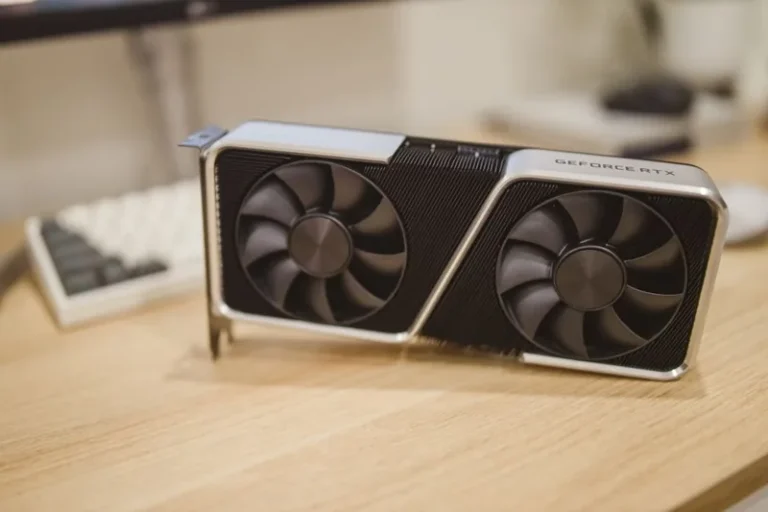
If the only metric that matters is maximum native frame rate, the RTX 4090 wins, and it isn’t close enough to argue. Its 16,384 CUDA cores and 24GB of VRAM give it a consistent 15-25% lead over the RTX 5080 in native rasterization at 4K, stretching further in path-traced workloads. The 5080 counters with a newer Blackwell architecture and faster GDDR7 memory, but those advantages narrow the gap rather than close it. So on pure raw performance, is RTX 5080 or 4090 better? The 4090, cleanly.
Is RTX 5080 or 4090 Better for Value and Efficiency?
Flip the question to value and the answer reverses. At $999 versus $1,599 launch pricing, the RTX 5080 delivers the overwhelming majority of the 4090’s performance for a fraction of the cost, while drawing only 360W against the 4090’s 450W. That efficiency also means a smaller power supply, less heat, and a quieter system. For the average high-end gamer who isn’t chasing absolute maximum frame rates, the 5080 is the far smarter use of money. Here’s a direct breakdown:
| Factor | RTX 5080 | RTX 4090 | Winner |
|---|---|---|---|
| Raw 4K performance | Strong | Stronger | 4090 |
| Frames per dollar | Excellent | Poor | 5080 |
| VRAM capacity | 16GB | 24GB | 4090 |
| Power efficiency | ~360W | ~450W | 5080 |
| Latest DLSS features | Full (MFG) | Partial | 5080 |
Is RTX 5080 or 4090 Better for 4K Gaming?
This is the arena where the decision tightens. At 4K with maximum settings and no upscaling, the 4090’s extra VRAM and raw throughput make it the better card, especially in future titles that will lean harder on memory. But when you enable DLSS 4 Multi-Frame Generation — a feature exclusive to the 5080 — the newer card can actually produce smoother displayed frame rates in many games. For a 4K gamer who embraces upscaling and frame gen, the 5080 is genuinely competitive; for a purist who wants native 4K ultra, the 4090 remains the answer. Detailed per-title numbers are available from Tom’s Hardware and PC Gamer.
Is RTX 5080 or 4090 Better for Ray Tracing?
Both cards handle ray tracing extremely well, but the 4090’s larger die gives it the edge in path-traced titles like Cyberpunk 2077 and Alan Wake 2, where the 5080’s 16GB can occasionally become a bottleneck. If your priority is maxed-out path tracing at 4K, the 4090 is the better tool. If you play at 1440p with ray tracing plus DLSS, the 5080 delivers a nearly identical experience for far less money, making the answer depend once again on your resolution and settings preferences.
Is RTX 5080 or 4090 Better for Creators and Workloads?
For workstation use — video rendering, 3D modeling, or local AI inference — the 4090’s 24GB framebuffer is a meaningful advantage that no efficiency trick can replace. Large AI models and heavy render scenes simply won’t fit in the 5080’s 16GB, so creators and researchers should lean toward the 4090 despite its age and higher price. For gamers who occasionally edit video or stream, the 5080’s NVENC encoder and lower power draw make it the more practical pick. Our streaming setup for gaming guide covers the gamer-plus-creator angle in depth.
Is RTX 5080 or 4090 Better Long-Term?
Thinking about longevity flips the argument again. The 5080’s newer architecture means it will enjoy longer driver optimization and feature support, but its 16GB of VRAM is the weak point as games grow hungrier. The 4090’s 24GB gives it more raw headroom to remain excellent for years, even if its feature set stops advancing. Resale value also tilts toward the 4090: flagship-class cards with large memory buffers tend to hold their used price better than mid-tier cards, so the upfront premium is partially offset if you plan to sell down the line. But if you upgrade every generation, the 5080 is fine; if you buy once and hold for five years, the extra VRAM of the 4090 starts to look like a hedge against future titles.
The Verdict: Which Should You Buy?
So, is RTX 5080 or 4090 better? My recommendation breaks down by buyer:
- Buy the RTX 5080 if you game at 1440p or use DLSS at 4K, care about value and efficiency, and want the newest features.
- Buy the RTX 4090 if you demand maximum native 4K performance, play heavily modded or VRAM-hungry games, or do GPU-accelerated creative work.
For most people in 2026, the RTX 5080 is the better overall purchase, but the 4090 still has clear wins for specific, demanding use cases. To pair either card correctly, check our best CPU for gaming in 2026 and best power supply for gaming PC guides.
A Note on Monitors and Pairing
Your monitor dictates which card actually shows off its strengths. The 5080 shines on a 1440p high-refresh panel or a 4K display where you’re happy running DLSS, while the 4090 justifies its cost on a native 4K 144Hz monitor where you refuse to leave frame rate on the table. Either card is overkill for a 1080p 60Hz screen, so pair your budget sensibly. If you need help matching a display to your new GPU, our best gaming monitor 2026 guide will point you in the right direction.
Putting It Together: A Quick Decision Matrix
If the sections above feel like a lot to juggle, this simple checklist settles the question in seconds. Choose the RTX 5080 if you’re a 1440p gamer, you use DLSS, you value a quieter and more efficient build, or you’d rather spend the extra money on a better monitor or more storage. Choose the RTX 4090 if you insist on native 4K ultra, you run path tracing or heavily modded titles, you need 24GB of VRAM for creative or AI work, or you plan to keep the same card for many years without upgrading. In practice, most readers land in the first bucket, which is why the 5080 is the default recommendation — but the 4090 remains the right tool for the demanding, VRAM-hungry minority.
FAQ
Is RTX 5080 or 4090 better for the average gamer?
The RTX 5080. It delivers near-flagship performance, newer DLSS features, and far better value and efficiency, making it the smarter buy for most 1440p and 4K gamers.
Is RTX 5080 or 4090 better for maximum 4K performance?
The RTX 4090. Its larger die and 24GB of VRAM give it a consistent 15-25% edge in native 4K and path-traced workloads.
Is RTX 5080 or 4090 better for VRAM-heavy workloads?
The RTX 4090, thanks to 24GB of memory versus the 5080’s 16GB, which matters for modded games, large render scenes, and local AI models.
Does the RTX 5080 have features the 4090 lacks?
Yes. DLSS 4 Multi-Frame Generation is exclusive to the Blackwell RTX 5080 and lets it produce much higher displayed frame rates in supported titles.
Final Verdict
After digging through every angle, the honest answer to “is RTX 5080 or 4090 better” is that it depends on your priorities, not a single spec. The 4090 is the raw-performance and VRAM champion, but the 5080 is the better flagship for the way most people actually game in 2026 — value-driven, resolution-scaled, and feature-forward. Match the card to your resolution, budget, and workload, and you won’t go wrong with either.