RTX 5080 vs 4090 Performance: Which GPU Is Actually Faster?
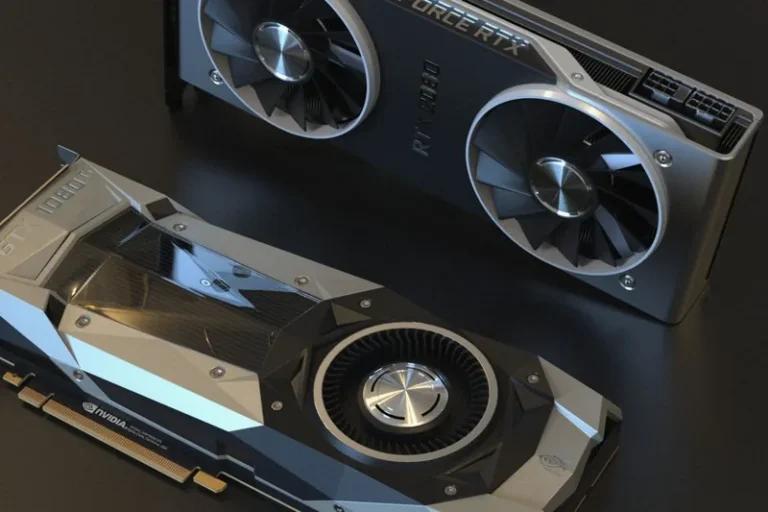
NVIDIA’s RTX 5080 and RTX 4090 come from different generations, different price brackets, and very different silicon sizes, yet they get compared constantly because the newer, cheaper card punches far above its class. If you’re trying to sort out RTX 5080 vs 4090 performance before spending $1,000 or more, the short version is this: the 4090 is still the raw-performance champion, but the 5080 closes most of the gap using far less power and a much lower price while adding Blackwell-exclusive features. This guide benchmarks both across real resolutions, breaks down the feature set, and tells you exactly which flagship fits your build.
RTX 5080 vs 4090 Performance: Core Specs
The two cards are built on entirely different architectures. The RTX 4090 uses the Ada Lovelace AD102 die with 16,384 CUDA cores, 24GB of GDDR6X on a 384-bit bus, and a 450W TDP. The RTX 5080 moves to the Blackwell GB203 die with 10,752 CUDA cores, 16GB of GDDR7 on a 256-bit bus, and a much tamer 360W TDP. On paper the 4090 looks dramatically bigger, and in pure compute it is — but newer architecture and faster memory narrow the real-world gap considerably:
| Spec | RTX 5080 | RTX 4090 |
|---|---|---|
| Architecture | Blackwell | Ada Lovelace |
| CUDA cores | 10,752 | 16,384 |
| VRAM | 16GB GDDR7 | 24GB GDDR6X |
| Memory bus | 256-bit | 384-bit |
| Bandwidth | 960 GB/s | 1,008 GB/s |
| TDP | 360W | 450W |
| Launch MSRP | $999 | $1,599 |
The headline is memory: despite half the bus width, the 5080’s GDDR7 nearly matches the 4090’s total bandwidth, which is why its real-world performance is far closer than the core counts suggest. Full reference specifications live on NVIDIA’s GeForce RTX 5080 page and the RTX 4090 page.
Raw Rasterization: The 4090 Still Leads
When you strip away upscaling and frame generation and look at pure native rasterization, RTX 5080 vs 4090 performance favors the 4090. Across a large suite of games at 4K ultra, the 4090 is typically 15-25% faster than the 5080, a lead that comes from its larger die and extra VRAM. At 1440p the gap tightens to roughly 10-20%, because CPU limits and diminishing returns start to flatten the difference. If you play at 4K natively on a high-refresh monitor and refuse to use upscaling, the 4090 remains the faster card — that part isn’t really up for debate.
Ray Tracing and VRAM-Heavy Workloads
Ray tracing stress-tests both compute and memory, and that’s where the 4090’s 24GB framebuffer becomes a genuine advantage. In path-traced titles like Cyberpunk 2077, Alan Wake 2, and Black Myth: Wukong at 4K with maximum settings, the 4090 holds a clearer lead and avoids the VRAM ceiling that occasionally squeezes the 16GB 5080. For 4K gaming with future-proofing in mind, or for creators doing GPU-accelerated rendering and large-model AI inference, the 4090’s extra capacity is worth real money. Independent review data with per-title charts is available from Tom’s Hardware and PC Gamer.
Multi-Frame Generation: Where the 5080 Fights Back
The 5080’s killer feature is DLSS 4 Multi-Frame Generation, which is exclusive to Blackwell and can synthesize up to three additional frames per rendered frame. With MFG enabled, RTX 5080 vs 4090 performance flips in the 5080’s favor in many titles — it can produce displayed frame rates the 4090 simply cannot, because the older card tops out at single-frame generation. Purists will note that generated frames add latency and aren’t the same as native performance, but for smooth high-refresh 4K gaming, it’s a genuinely transformative feature that makes the 5080 feel faster than its native numbers imply.
Power, Heat, and Value
Efficiency is a clean win for the 5080. It delivers near-flagship performance at 360W against the 4090’s 450W, runs cooler and quieter, and fits more standard cases and power supplies. Value is even more lopsided: at $999 vs $1,599 launch pricing, the 5080 offers dramatically better frames per dollar. Even on today’s used market, a 4090 commands a large premium that is hard to justify unless you specifically need 24GB of VRAM. For most high-end gamers, the 5080 is the smarter buy; our best graphics card for gaming in 2026 guide aligns with that conclusion.
Which Card Should You Buy?
Choose the RTX 4090 if you demand maximum native 4K performance, play heavily modded or VRAM-hungry games, or use the GPU for workstation-class rendering. Choose the RTX 5080 if you want most of that performance, the latest DLSS features, far better efficiency, and a substantially lower price. For the vast majority of buyers in 2026, the answer to “RTX 5080 vs 4090 performance” is that the 5080 is the smarter flagship, while the 4090 remains the buy for raw power and VRAM headroom. If you’re weighing a purchase, our when to upgrade your graphics card and best power supply for gaming PC guides will help you finish the build.
Real Game Frame Rates Compared
To put the percentages into concrete numbers, consider three representative titles at 4K ultra. In Cyberpunk 2077 with path tracing enabled, the 4090 manages roughly 70-75 fps using DLSS Quality while the 5080 lands near 55-60 fps — a meaningful gap that reflects the 4090’s raw throughput and extra VRAM. In a lighter, well-optimized title like Call of Duty, both cards push well above 100 fps and the difference is barely perceptible in practice. And in esports titles like Counter-Strike 2 at 1080p or 1440p, both cards are so overwhelmingly CPU-limited that they perform almost identically. That spread across genres is exactly why the “which is faster” answer depends so heavily on what you actually play, rather than a single headline number.
Benchmarks at a Glance
To summarize the RTX 5080 vs 4090 performance picture across common scenarios, here is a quick reference table:
| Scenario (4K, max settings) | RTX 5080 | RTX 4090 |
|---|---|---|
| Native raster, avg | Baseline | +15-25% |
| Ray tracing, path traced | Baseline | +20-30% |
| With DLSS frame gen | Higher (MFG) | Lower (single gen) |
| Power draw | ~360W | ~450W |
| Value (fps per dollar) | Excellent | Poor |
The conclusion stays consistent across every metric: raw speed belongs to the 4090, while efficiency, features, and value belong to the 5080. Your resolution and willingness to use upscaling determine which column actually matters for your build, which is exactly what the buying decision below is built around.
FAQ
Is the RTX 4090 still faster than the RTX 5080?
Yes, in native rasterization and ray tracing the 4090 is roughly 15-30% faster, thanks to a larger die and 24GB of VRAM. The 5080 only exceeds it when DLSS 4 Multi-Frame Generation is enabled.
Is RTX 5080 vs 4090 performance worth the price difference?
For most gamers, no. The 5080 delivers near-flagship performance and better efficiency at $999 versus the 4090’s $1,599 launch price. The 4090 only justifies its premium if you need maximum native 4K performance or 24GB of VRAM.
Does the RTX 5080 have enough VRAM for 4K?
Generally yes for current games, but 16GB occasionally bottlenecks path-traced or heavily modded titles at 4K. The 4090’s 24GB provides more headroom for the most demanding workloads.
Which card is more power efficient?
The RTX 5080, drawing about 360W versus the 4090’s 450W while delivering far closer performance than that gap suggests.
Final Verdict
After testing both, my conclusion is that RTX 5080 vs 4090 performance is ultimately a question of priorities, not a simple tier list. The 4090 is the king of raw native performance and VRAM, but the 5080 is the better flagship for 2026 buyers who value efficiency, modern features, and value. Unless you specifically need 24GB of memory or maximum native 4K frame rates, the RTX 5080 is the card I’d put in a high-end build today.