Small Form Factor Gaming PC Build: Compact Power for 2026
A small form factor gaming PC build is the smartest way to get full desktop-class performance into a chassis you can lift with one hand and stash next to your monitor or TV. The appeal is obvious: a compact footprint, a clean desk, and a machine you can actually carry to a LAN party or between rooms. The trade-off everyone worries about — thermals and upgrade limits — has shrunk dramatically over the last two generations of hardware. In 2026, a well-planned small form factor gaming PC build can house a flagship CPU and a high-end GPU without throttling, provided you pick the right case, cooling, and power supply.
This guide walks through the exact parts for a balanced small form factor gaming PC build in 2026, what each component costs, and the mistakes that quietly ruin compact builds. If you already know you want maximum frames per dollar, check our roundup of the best gaming pc build 2026 before committing to a chassis.
What a Small Form Factor Gaming PC Build Actually Means
Before buying anything, pin down which size class you are building. A “small form factor gaming PC build” is a broad label covering three real chassis standards:
- Mini-ITX (SFF): motherboards 17 x 17 cm, cases typically under 20 liters. This is what most people mean by SFF.
- Micro-ATX small towers: slightly larger, cheaper boards, more airflow, but still compact at 20–30 liters.
- Ultra-compact / console-style cases: sub-10-liter enclosures like the Fractal Design Ridge that sit flat under a TV.
Each choice changes what CPU cooler and graphics card you can fit. Mini-ITX is the classic sweet spot, but it also carries the familiar SFF tax — smaller motherboards and SFX power supplies usually cost more than their full-size equivalents.
The Foundation: Case and Motherboard
For a 2026 small form factor gaming PC build, the case drives every other choice. Three enclosures stand out this generation:
| Component | Model | Approx. Price (USD) | Notes |
|---|---|---|---|
| Case | Fractal Design Terra | $180 | ~10.4L, adjustable spine, great airflow |
| Case | Cooler Master NR200P V2 | $120 | ~18L, fits large air coolers and 3-slot GPUs |
| Case | NVIDIA Ncase M2 / Asus ROG NUC-style | $250 | Flagship-grade, premium materials |
| Motherboard | ASRock B850I Lightning Wi-Fi | $210 | AMD AM5 Mini-ITX, PCIe 5.0 |
| Motherboard | MSI MPG B850I Edge Wi-Fi | $220 | AMD AM5 Mini-ITX, strong VRM |
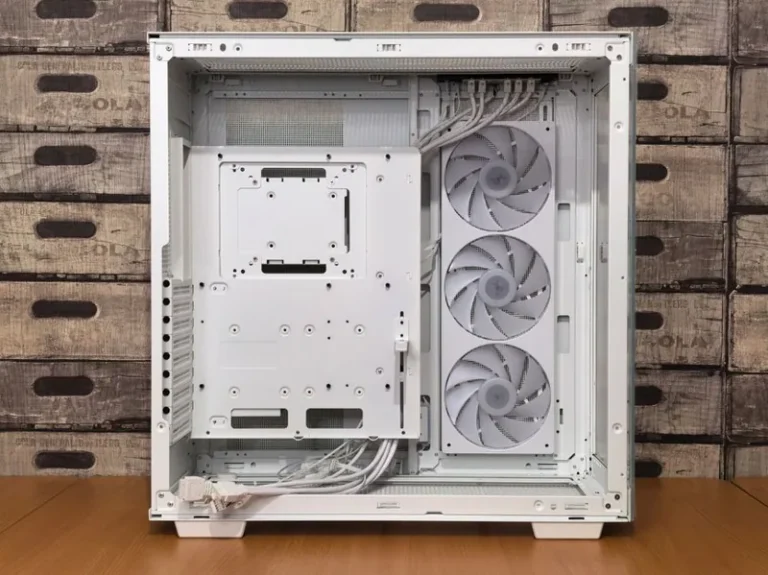
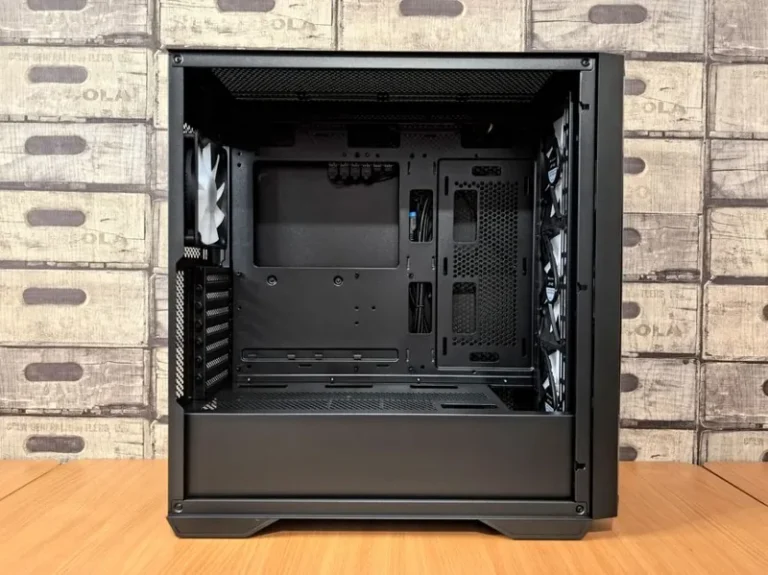
The Fractal Terra is the enthusiast favorite because of its sliding center spine, which lets you trade CPU cooler height for GPU thickness. The NR200P V2 remains the best value — it fits tower coolers up to 155 mm and triple-slot graphics cards up to 330 mm, so you are not forced into exotic parts. For the motherboard, an AM5 Mini-ITX board with a B850 chipset gives you DDR5, PCIe 5.0, and access to the excellent Ryzen 7 9800X3D.
CPU and Cooling: Keeping It Quiet and Cool
Thermals are the single biggest reason people hesitate to do a small form factor gaming PC build. Here’s the reality in 2026: a Ryzen 7 9800X3D runs cool enough to pair with a low-profile or compact tower cooler, while an Intel Core Ultra 7 265K is efficient but wants a beefier cooler under sustained load. Both are excellent, and our core ultra 7 vs ryzen 7 comparison dives into which one fits your budget and workload.
Cooler fitment rules for SFF:
- Under ~48 mm clearance (Terra, sub-10L): Noctua NH-L9a or Thermalright AXP90-X47 full copper.
- 55–75 mm clearance: Noctua NH-L12S or Thermalright AXP120-X67.
- 140+ mm clearance (NR200P V2): any 120 mm tower cooler like the Thermalright Peerless Assassin 120.
Pair the cooler with two slim 120 mm case fans and set a modest fan curve. A quiet small form factor gaming PC build is very achievable — you just cannot brute-force it with a 360 mm AIO in a 10-liter box. For a full list of the best air and liquid options, see our guide to the best cpu cooler 2026.
Graphics Card: Fit Before You Buy
The most common SFF failure is ordering a GPU that does not physically fit. Always check two numbers against your case: maximum GPU length and thickness in slots. In 2026 these are the cards that actually fit compact builds:
- NVIDIA GeForce RTX 5070 / 5070 Ti — two-slot, around 240–260 mm, easy to fit.
- AMD Radeon RX 9070 XT — reference models are two-slot and under 280 mm.
- NVIDIA GeForce RTX 5080 Founders Edition — dual-slot blower-through design, surprisingly SFF-friendly at ~304 mm.
Measure twice, buy once. If you want to maximize raw GPU performance per watt inside a small chassis, our best gpu for gaming price to performance guide ranks the current field. And no matter which card you choose, confirm your power supply can feed it — see best power supply for gaming pc.
Memory and Storage
A small form factor gaming PC build does not sacrifice memory or storage speed.
- RAM: 32 GB (2 x 16 GB) of DDR5-6000 CL30 is the 2026 sweet spot. Low-profile modules without tall heat-spreaders clear compact coolers more easily. If you are weighing DDR4 against DDR5, our ddr4 vs ddr5 gaming explainer breaks down the real-world FPS difference.
- Storage: A single 2 TB PCIe 4.0 NVMe drive is enough for a huge library and eliminates SATA cabling entirely — a genuine win in tight spaces. Check best nvme ssd for gaming for specific picks.
Power Supply: SFX vs ATX
Small cases split into two camps on power:
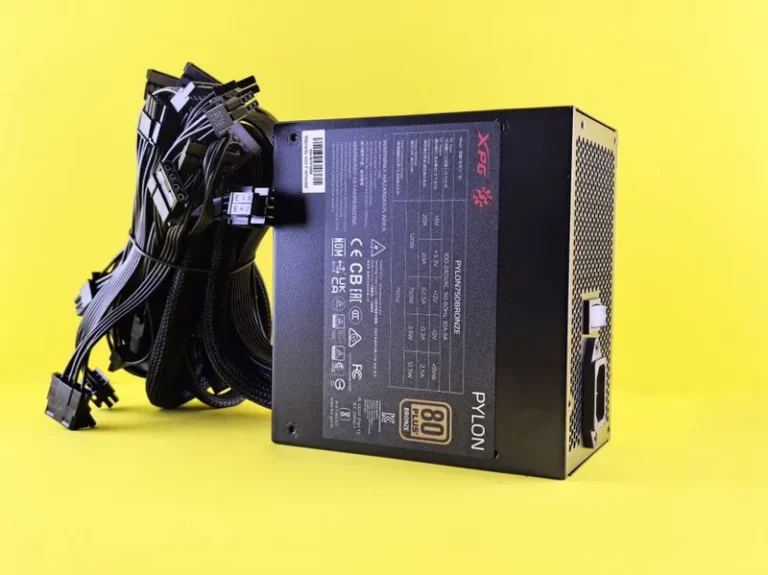
- SFX / SFX-L supplies (Corsair SF850L, Lian Li SP750) — required for sub-15L cases, generally $30–$50 more than equivalent ATX units.
- ATX supplies — fit larger cases like the NR200P V2 with the right bracket, saving money.
For a system with an RTX 5070-class card, a quality 650–750 W unit is plenty. Bump to 850 W if you plan a 5080. Headroom is cheaper than a rebuild.
Step-by-Step Assembly Order
Building in a small case punishes the wrong order. Follow this sequence to avoid a teardown:
- Install the CPU and RAM onto the motherboard first, on the box.
- Mount the M.2 drive now — it is often under the board or a heatsink.
- Install the CPU cooler before the board goes in the case.
- Route the front-panel and fan cables loosely, then seat the motherboard.
- Connect the 24-pin and 8-pin EPS while you still have finger room.
- Slide in the GPU last, then tie everything down.
- Do a bench POST before closing the panels, if the case allows.
How Much Should You Spend?
A realistic 2026 small form factor gaming PC build lands in two clear tiers. For a 1440p machine, budget roughly $1,200 to $1,500. For 4K, target $1,800 to $2,200 — which is exactly the territory covered in our 2000 dollar gaming pc build breakdown. The SFF tax adds around $80 to $150 versus an equivalent mid-tower build, mostly from the motherboard, power supply, and case.
Common Small Form Factor Mistakes to Avoid
Even experienced builders stumble the first time they move from a mid-tower to a compact chassis. Three mistakes cause most of the returns and rework you read about in forums.
Buying the GPU before checking fit. Length and thickness matter more than the spec sheet suggests. A card that slots easily into a mid-tower can be 15–20 mm too long for a Fractal Terra or too thick for a two-slot case. Measure the case’s GPU clearance against the exact model you want before ordering, and confirm vendor dimensions on the NVIDIA GeForce product page.
Under-buying the power supply. SFX units carry a premium, so the tempting “saving” is grabbing a lower-wattage budget unit. Modern GPUs spike briefly well above their rated draw, and a 500 W bargain brick will trip under load. A quality 650–750 W SFX unit costs only a few dollars more.
Ignoring RAM and cooler clearance. Tall RGB heat-spreaders collide with low-profile coolers and the front fan of dual-tower air coolers. Low-profile memory (see how much ram for gaming pc) sidesteps the entire problem.
These pitfalls are trivially avoidable with a five-minute measurement pass. The community build logs and SFF case reviews at Tom’s Hardware are an excellent second opinion before you click buy.
FAQ
Is a small form factor gaming PC build harder than a normal build?
It is more fiddly, not more difficult. Cable management and part fitment require more planning, but the component choices are the same performance parts. Anyone who has built a mid-tower can manage it with patience and the assembly order above.
Will a small PC overheat my components?
Not if you choose the case and cooler correctly. Modern compact cases with mesh panels and the efficient CPUs of 2026 stay within safe temperatures. The key is matching cooler height to the case clearance instead of forcing a mismatched part.
Is Mini-ITX worth the extra cost?
If desk space, portability, or aesthetics matter to you, yes. Expect roughly $80–$150 extra over an equivalent micro-ATX or full-ATX build. The premium buys you a smaller motherboard, an SFX power supply, and a more carefully engineered case.
Can I use a full-size power supply?
Only in larger compact cases like the Cooler Master NR200P V2 or micro-ATX small towers. Sub-15-liter cases almost always require an SFX or SFX-L unit.
Conclusion
A small form factor gaming PC build in 2026 is no longer a compromise; it’s a legitimate way to get flagship performance into a footprint that fits your life. Pick an AM5 Mini-ITX board, a two-slot GPU, the right CPU cooler for your case clearance, and an SFX power supply, and you will end up with a machine that runs cool, quiet, and fast while taking up a fraction of the space. Start with the case, verify GPU fit, and build in the right order — and you will avoid the headaches that give SFF a bad name. Browse our best gaming pc build 2026 guide if you decide a larger case makes more sense after all.