
Best 4K Monitor for Gaming 2026: 7 Picks for Every Budget
Finding the best 4K monitor for gaming 2026 means balancing resolution, refresh rate, and price more carefully than ever. A 4K monitor delivers four times the pixels of 1080p, which makes games look dramatically sharper, but you need a GPU that can actually drive those pixels. With the RTX 50 series and RX 9000 series now widely available, 4K gaming has finally moved from enthusiast-only territory into the mainstream, and monitor makers have responded with a flood of excellent panels.
This guide ranks seven standout 4K gaming monitors across OLED, budget, and competitive categories. We focused on real-world gaming performance, color accuracy, and value so you can pick the right screen without drowning in spec sheets.
What to Look For in a 4K Gaming Monitor
Before we get to the picks, here are the four specs that actually matter when you shop for the best 4K monitor for gaming 2026. For objective measurements we cross-reference RTINGS, and NVIDIA’s DLSS overview is the best reference for how upscaling affects 4K performance.
Refresh Rate and Response Time
For single-player and cinematic games, 120 Hz to 144 Hz is plenty and feels far smoother than the 60 Hz of early 4K panels. Competitive players should look for 240 Hz models, which now exist in both OLED and fast IPS variants.
Panel Type: OLED vs IPS vs Mini-LED
OLED panels deliver perfect blacks and near-instant response times but cost more. Fast IPS panels are the value sweet spot, while Mini-LED backlights split the difference with high brightness and strong HDR without OLED’s price tag.
HDR and Brightness
A monitor’s HDR performance matters as much as its resolution for immersion. Look for at least DisplayHDR 600 for IPS panels, or true per-pixel HDR on OLED, which is the best you can buy.
Connectivity and Adaptive Sync
Make sure the monitor has HDMI 2.1 and DisplayPort 2.1, plus support for both G-Sync and FreeSync Premium so variable refresh rate works with either GPU brand.
Best Overall: LG UltraGear 32GS95UE
The LG 32GS95UE is the best 4K monitor for gaming 2026 for most people. It is a 32-inch OLED that can run at 4K 240 Hz natively or drop to 1080p 480 Hz with a single toggle, making it a genuine all-rounder. Colors are stunning out of the box, response time is effectively instant, and the dual-mode feature means competitive players do not have to choose between resolution and speed.
Best Budget 4K: Gigabyte M28U
The Gigabyte M28U remains one of the best-value 4K gaming monitors you can buy. It pairs a 28-inch fast IPS panel with 144 Hz, HDMI 2.1, and a built-in KVM switch, all for a street price well under $500. It skips the eye-searing HDR of pricier panels, but for sharp, smooth, affordable 4K gaming it is hard to beat.
Best OLED: ASUS ROG Swift PG32UCDM
If money is no object, the ASUS ROG Swift PG32UCDM is the enthusiast pick. It combines a 32-inch QD-OLED panel, 4K 240 Hz, and exceptional HDR brightness, and it includes a heatsink that reduces burn-in risk. The colors and contrast are the best you will find in a gaming monitor in 2026, period.
Best for Competitive Play: Samsung Odyssey G80SD
Competitive players who still want 4K sharpness should look at the Samsung Odyssey G80SD. It is a 32-inch QD-OLED with a 240 Hz refresh rate, a 0.03 ms response time, and Samsung’s Glare-Free coating. Combined with low input lag, it gives esports players a genuine edge without sacrificing the crispness of 4K.
Best Mini-LED: Cooler Master Tempest GP27U
For buyers who want strong HDR without OLED prices, the Cooler Master Tempest GP27U is a standout. Its 27-inch Mini-LED panel reaches 160 Hz with over a thousand local dimming zones, delivering HDR contrast that approaches OLED for hundreds of dollars less. It is an excellent middle ground.
Comparison Table: Best 4K Monitor for Gaming 2026
| Monitor | Panel | Refresh Rate | HDR | Approx. Price (USD) |
|---|---|---|---|---|
| LG UltraGear 32GS95UE | OLED | 240 Hz | Excellent | $1,199 |
| Gigabyte M28U | Fast IPS | 144 Hz | Good | $449 |
| ASUS ROG Swift PG32UCDM | QD-OLED | 240 Hz | Excellent | $1,299 |
| Samsung Odyssey G80SD | QD-OLED | 240 Hz | Excellent | $1,099 |
| Cooler Master GP27U | Mini-LED | 160 Hz | Very good | $649 |
| Dell Alienware AW3225QF | QD-OLED | 240 Hz | Excellent | $999 |
| BenQ MOBIUZ EX321UX | Mini-LED | 144 Hz | Very good | $799 |
How Much GPU Do You Need for 4K?
Running 4K gaming smoothly depends far more on your graphics card than on the monitor itself. At 4K, the GPU is almost always the bottleneck, so pairing a 4K display with a weak card is a waste of money.
Recommended GPUs for 4K Gaming
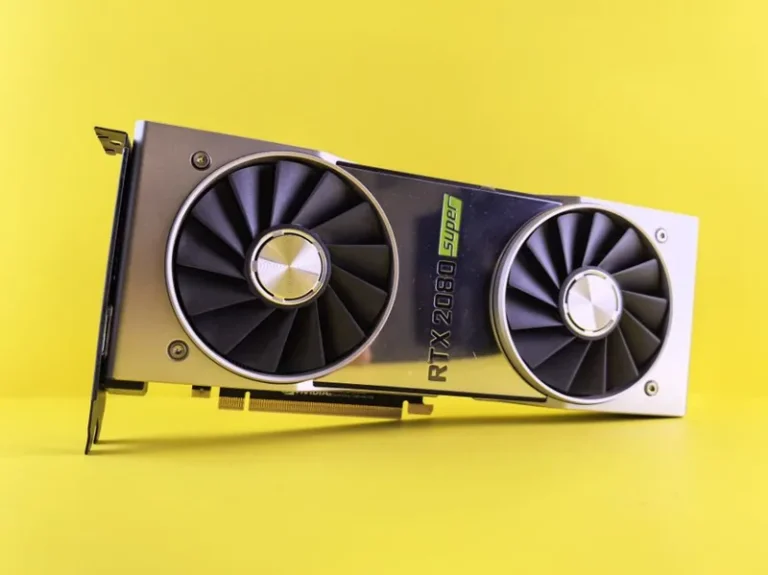
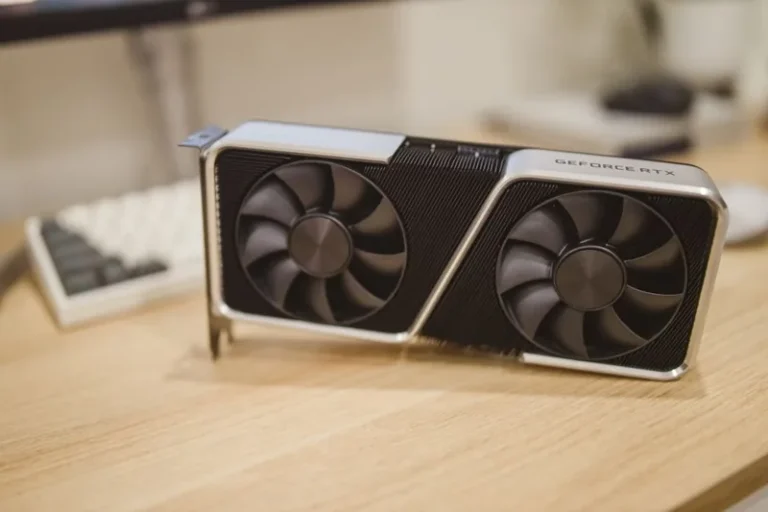
For 4K at 60 to 120 fps in modern titles, you want at least an RTX 5070 Ti or RX 9070 XT. For 4K at 144 Hz and above in demanding games, step up to an RTX 5080 or RTX 5090. Upscaling technologies like DLSS 4 and FSR 4 have made 4K far more achievable, so a mid-range card can often reach playable frame rates with upscaling enabled.

Panel Types Compared for 4K Gaming
Choosing the right panel type is often more important than picking between two similar monitors, so it is worth understanding what each technology brings to the best 4K monitor for gaming 2026.
OLED
OLED delivers perfect blacks and near-instant response times because each pixel is self-lit and can switch off completely. The result is stunning contrast and the smoothest motion you can buy, which is why our top three picks are OLED. The trade-off is a higher price and, to a lesser degree, long-term burn-in risk.
Mini-LED
Mini-LED takes a fast IPS panel and pairs it with hundreds or thousands of tiny backlight zones. This produces HDR contrast that approaches OLED while staying cheaper and free of burn-in concerns. It is the smart choice when you want strong HDR without paying OLED prices.
Fast IPS
Fast IPS remains the value king. It offers good color, wide viewing angles, and now refresh rates up to 240 Hz, all at prices far below OLED. If your main goal is sharp 4K gaming on a budget, a fast IPS panel like the Gigabyte M28U is exactly what you want.
Whichever panel you pick for the best 4K monitor for gaming 2026, pair it with a GPU that can hold a high frame rate, because a great panel driven by a weak card is still a frustrating experience.
FAQ
Is 4K worth it over 1440p for gaming?
For immersive single-player games, yes, the extra sharpness is immediately noticeable on a 32-inch screen. For competitive esports, 1440p at high refresh rates is often the smarter choice because it is easier to drive. The best 4K monitor for gaming 2026 is ideal when your GPU can hold 120 fps or more.
What refresh rate should I get for 4K?
Aim for at least 120 Hz. The days of 60 Hz 4K panels are over, and the smoothness difference is huge. If you play fast shooters, look for a 240 Hz 4K OLED.
Does 4K gaming require a top-tier GPU?
Not anymore. With DLSS 4 and FSR 4 upscaling, a mid-range RTX 5070 Ti can deliver a great 4K experience in most titles. You only need a flagship card for native 4K at max settings in the heaviest games.
Are OLED 4K monitors safe from burn-in?
Modern OLED monitors include heatsinks and pixel-shift features that reduce burn-in risk dramatically. For gaming use with varied content, burn-in is far less of a concern than it was a few years ago, though static desktop elements should still be avoided over very long sessions.
Conclusion
The best 4K monitor for gaming 2026 depends on your budget and play style, but you cannot go wrong with the LG 32GS95UE for a do-everything OLED or the Gigabyte M28U if you want excellent 4K without spending a fortune. Whichever you choose, make sure your GPU can drive it, and you will finally see what 4K gaming is supposed to look like. For more display advice, check our guide to the best gaming monitor of 2026, our best 1440p monitor picks, and our recommendations for the best graphics card for gaming in 2026.