
Gaming PC for Casual Gamer 2026: Best Budget-Friendly Builds
You do not need a four-thousand-dollar monster to enjoy great games, and the ideal gaming pc for casual gamer in 2026 is a mid-range machine that runs almost everything at 1080p or 1440p without breaking a sweat. Casual players want reliable frame rates, quiet operation, and an easy upgrade path, not a liquid-cooled showpiece. This guide lays out the parts, prices, and settings that get you there for the least amount of money.
A gaming pc for casual gamer is really about balance: match a value CPU to a capable GPU, add enough memory, and skip the enthusiast extras that inflate the price without improving your day-to-day experience. Our best budget gaming PC build under $1000 guide is the natural starting point, and everything below stays within that philosophy.
What a Casual Gamer Actually Needs
Casual gaming usually means favorites like Minecraft, Fortnite, Valorant, cozy life sims, and the occasional triple-A title at moderate settings. None of these demand a flagship build, and most are single-player or low-stakes multiplayer where a perfectly locked 240 FPS is irrelevant.
The reliable target for a gaming pc for casual gamer is steady 60 to 100 FPS at 1080p with high settings, plus the ability to run 1440p if you already own a higher-resolution monitor. That target is comfortably inside a mid-range budget, and chasing more performance is simply wasted money for this use case. Value-focused build guides at Tom’s Guide and PC Gamer reach the same conclusion: at 1080p, a mid-range card saturates nearly every casual-friendly title, so overspending on a flagship GPU returns almost nothing.
Best Gaming PC for Casual Gamer: Recommended Build
Here is a 2026 parts list that nails the casual sweet spot. Prices are approximate US street prices.
| Component | Part | Price (USD) |
|---|---|---|
| CPU | AMD Ryzen 5 7600 or Intel Core i5-15500F | $199 |
| GPU | AMD Radeon RX 9060 or RTX 5060 | $299 |
| Motherboard | B650M AM5 / B860 Intel board | $139 |
| Memory | 16 GB DDR5-6000 (32 GB optional) | $55 |
| Storage | 1 TB Gen4 NVMe SSD | $64 |
| Power Supply | 650W 80+ Bronze | $65 |
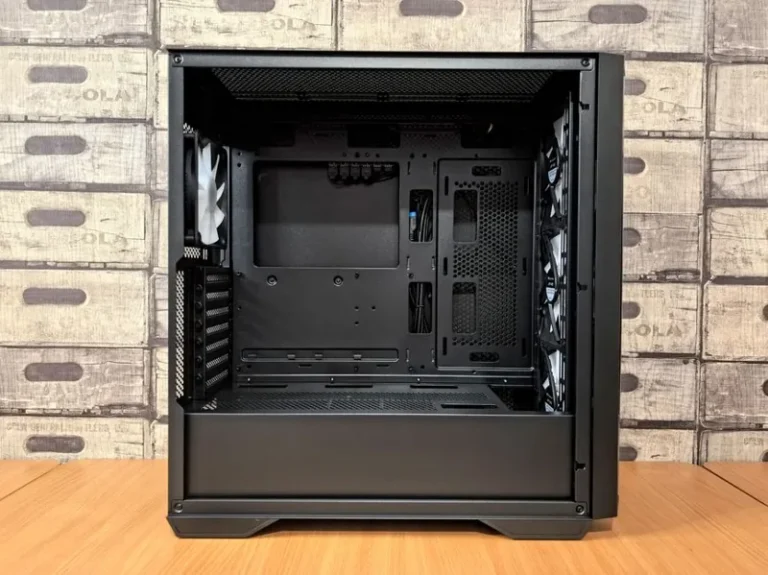
| Case | Mid-tower ATX with 3 fans | $60 |

This build lands near $880 before tax and will play essentially everything a casual gamer touches for years. Every dollar beyond this point returns sharply diminishing improvements unless you jump to a much higher-resolution display, which most casual players will not.
CPU and Memory: Do Not Overbuy
For a gaming pc for casual gamer, a six-core modern CPU is more than enough, and 16 GB of memory remains the honest baseline in 2026. Bumping to 32 GB only makes sense if you keep dozens of browser tabs open while gaming or plan to multitask with streaming, which our how much RAM for gaming PC guide explains in detail.
The bigger win is storage. A 1 TB NVMe drive loads games dramatically faster than a hard drive and avoids the constant shuffling of uninstalling to free space. Our best NVMe SSD for gaming guide covers the current best-value drives if you want to expand on the part above.
GPU Choice and Settings That Matter
The graphics card is the only component where a casual gamer should hesitate less. A modern 12 GB-class GPU such as the RX 9060 or RTX 5060 keeps you smooth at 1080p ultra and gives comfortable 1440p performance, which future-proofs you against increasingly heavy games.
Turn on upscaling technologies and you add years to the card’s useful life. Medium-high settings with upscaling deliver a nearly identical image to native ultra in most titles, meaning a casual gamer rarely needs to touch the most expensive GPU tiers. If your current card is aging, our when to upgrade your graphics card guide helps you time the swap.
The display and peripherals half of the equation
A gaming pc for casual gamer pairs best with a quality 1080p or 1440p monitor running 144 Hz or 165 Hz, which is enough for smooth motion without demanding a flagship GPU. Match the monitor to your card’s output: a mid-range card comfortably drives 1440p 165 Hz in lighter titles, while 1080p high refresh is the ideal fit if you mostly play competitive games.
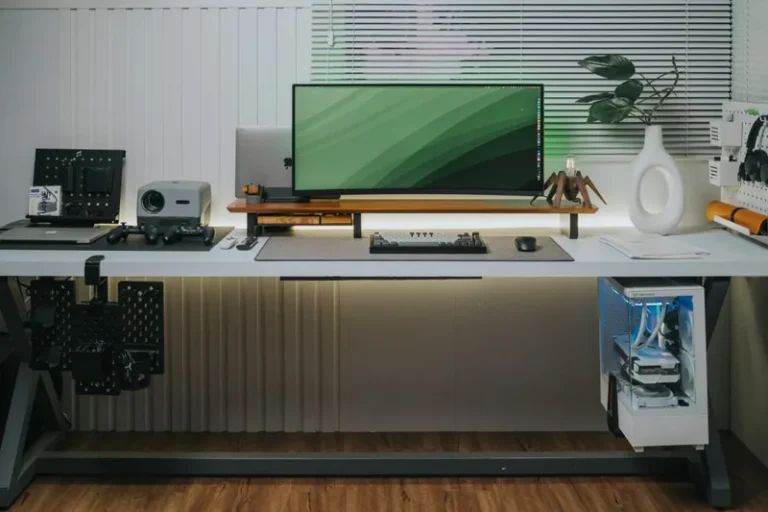
Peripherals matter more than you might expect for day-to-day enjoyment. A comfortable keyboard, a decent mouse, and a good headset turn a budget tower into a setup you actually want to sit at every evening. None of these need to cost much, and they are easy to upgrade incrementally over time without touching the internals of the PC.
Settings that keep your build feeling new
The single best free upgrade for a casual gamer is dialing settings sensibly. Turning shadows from ultra to high, disabling motion blur, and enabling upscaling often doubles frame rates with almost no visible loss. Most casual players will not notice the difference, and the smoother experience keeps an older build feeling current for a year or two longer than it otherwise would.
Keep It Quiet, Cool, and Low-Maintenance
Casual gamers often share a living space, so noise matters. A mid-tower case with three fans and a tower cooler runs virtually silent at idle and stays quiet under load, unlike compact builds that spin small fans loudly. Choose a non-modular or semi-modular power supply only if you are confident with cable management, and lean toward a semi-modular unit to keep the build tidy.

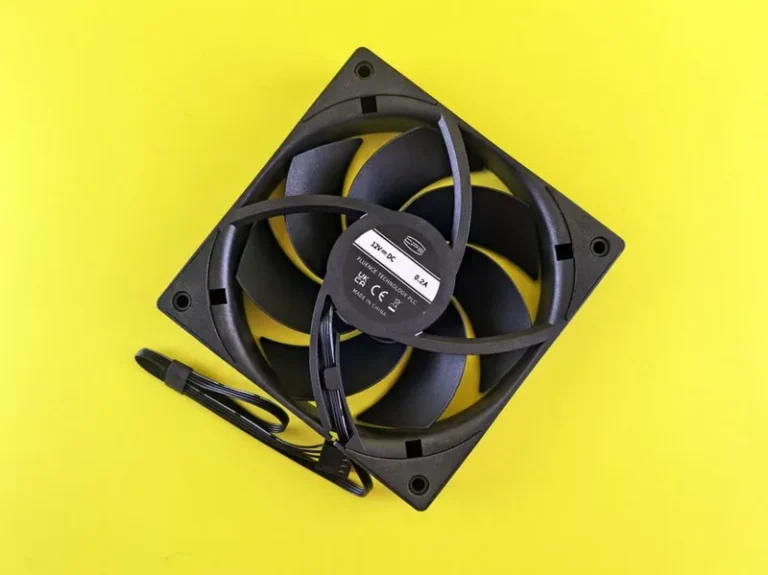
Reliability is worth more than raw speed for this audience. A balanced build with a solid power supply and stock or modest cooling will simply work for five years with zero tinkering, which is exactly what a gaming pc for casual gamer should deliver. If your room runs warm, add one extra intake fan at the front, which costs a few dollars and meaningfully lowers GPU and CPU temperatures during longer sessions. Dust management is equally easy: a mesh front with a removable filter keeps the internals clean with minimal maintenance, so the build stays quiet and cool for its entire life.
Prebuilt Alternatives Worth Considering
If you prefer to buy rather than build, several 2026 prebuilts hit the same value target with a warranty attached. Look for systems built around a Ryzen 5 or Core i5 with a 12 GB-class GPU and at least 16 GB of memory, and avoid anything that pairs a weak power supply with a fast GPU. Building still saves money, but a well-priced prebuilt can be worth the convenience premium for a casual gamer who values time over thermals.
FAQ
How much should I spend on a gaming PC for casual gamer?
Between $800 and $1,100 is the sweet spot. That budget delivers smooth 1080p high settings and comfortable 1440p performance.
Do I need a dedicated GPU for casual gaming?
Yes. Integrated graphics have improved, but even a modest dedicated card like an RX 9060 or RTX 5060 is dramatically better for the heavier titles casual players try.
Is 16 GB of RAM enough in 2026?
For casual gaming, yes. Upgrade to 32 GB only if you multitask heavily or stream while gaming.
Can a casual gaming PC handle 1440p?
A mid-range build with a 12 GB-class GPU handles 1440p comfortably at high settings with upscaling enabled.
Should I build or buy prebuilt?
Building saves money and teaches you to upgrade later, while a prebuilt adds convenience and a warranty. Either route works at this budget.
Conclusion
A gaming pc for casual gamer in 2026 is all about balance, and a mid-range build around a Ryzen 5 or Core i5 with a 12 GB-class GPU hits that balance perfectly for under a thousand dollars. Skip the flagship tax, keep it quiet and upgradeable, and you will have a machine that plays everything you love for years. For the complete component breakdown, see our best gaming PC build 2026 and best budget CPU for gaming guides.