Which Is Better for Gaming: RTX or GTX? The 2026 Verdict
If you are buying a used graphics card, the question of which is better for gaming rtx or gtx comes up constantly, because Nvidia’s GTX cards are everywhere on the secondhand market. The short answer is straightforward: RTX is better for gaming, and by a widening margin. GTX cards lack the two features that now define modern Nvidia gaming — real-time ray tracing and DLSS upscaling — and without them a GTX card ages much faster in current titles.
That does not make every GTX card worthless. At the very bottom of the used market there are still a few GTX models worth picking up for ultra-budget builds. But for the vast majority of builders, RTX is the correct answer, and this guide explains exactly why with real numbers.
What RTX and GTX Actually Mean
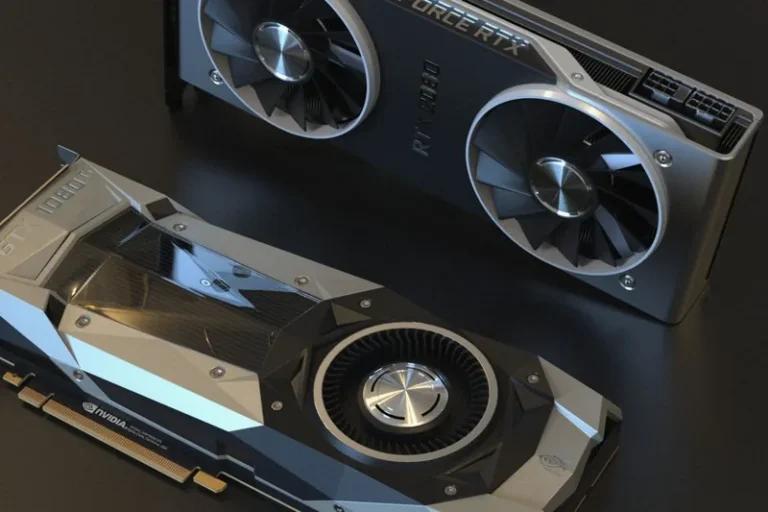
GTX is Nvidia’s older branding, covering the Pascal (GTX 10 series) and Turing-based GTX 16 series cards (see Nvidia’s GeForce graphics cards for the current lineup). These cards are purely for rasterized rendering — they draw the game traditionally, with no dedicated hardware for ray tracing or AI upscaling.
RTX is the modern branding, introduced with the Turing RTX 20 series and carried through the RTX 30, 40, and 50 series. Every RTX card ships with RT cores for ray tracing and Tensor cores that power DLSS. Those two additions transform what the card can do, far beyond raw clock speed.
The Feature Gaps, Side by Side
The hardware difference is stark once you lay it out.
| Feature | GTX 16 series | GTX 10 series | RTX 20 series | RTX 40/50 series |
|---|---|---|---|---|
| Ray tracing cores | None | None | Yes (1st-gen) | Yes (3rd/4th-gen) |
| DLSS support | No | No | DLSS 2/3 | DLSS 3/4 |
| Frame generation | No | No | Limited | Yes |
| Architecture | Turing (crippled) | Pascal | Turing | Ada/Blackwell |
| Typical 2026 use | Budget 1080p | Legacy / very low budget | Budget-mid | Mainstream |
The most important line is DLSS. On a GTX card, you render every pixel at native resolution. On an RTX card, DLSS lets you render at a lower internal resolution and reconstruct a sharp image, often recovering 30–50% more frame rate with minimal quality loss. Across the life of a card, that is the difference between staying playable and being obsolete two years earlier.
Performance in Modern Games
In raw terms, a GTX card and a similarly-positioned RTX card from the same broad era perform within a few percent of each other in games that only use rasterization. The difference appears the moment a title leans on ray tracing or benefits from upscaling — which, by 2026, is most major releases. An RTX 2060 can enable ray-traced lighting with DLSS and remain playable, while a GTX 1660 Ti with comparable raw power cannot enable ray tracing at all.
For a concrete example, take the GTX 1660 Ti and the RTX 2060, two cards that were close in price at launch. Raw 1080p frame rates are within roughly 8% of each other. But flip on DLSS Quality mode in a heavy 2026 title and the RTX 2060 jumps 35–45% ahead while the GTX 1660 Ti has no equivalent. That gap only grows in newer games.
Which GTX Cards Are Still Worth Buying?
A handful of GTX cards still make sense in 2026, but only at rock-bottom prices and only for specific purposes:
- GTX 1650 / 1650 Super — a competent card for esports titles such as Valorant, CS2, and Fortnite at 1080p, provided it is cheap and you never intend to play AAA games.
- GTX 1660 Super — the best of the GTX 16 range, still a solid 1080p medium card for around $60–$80 used.
- GTX 1070 / 1080 / 1080 Ti — aging Pascal cards that can still game at 1080p, but power draw and driver support are becoming concerns.
Everything else in the GTX range is hard to recommend at any price unless it is nearly free. If a game uses DirectX 12 ray tracing or heavily benefits from DLSS, the GTX card simply cannot keep up.

Drivers, Features, and Longevity
Beyond ray tracing and DLSS, the longevity argument favours RTX. Nvidia’s newest driver features, performance optimizations, and AI tools are developed for the RTX architecture. GTX 10 series cards in particular are drifting into legacy territory, and as engines adopt new rendering paths, the practical playability of GTX cards in future titles will continue to decline faster than RTX equivalents.
A Quick History Lesson: Why GTX Gave Way to RTX
The transition from GTX to RTX marked a real change in how Nvidia approached graphics, not just a rename. GTX cards, from the old GTX 780 through the GTX 1660 Ti, optimized a single job: rasterizing triangles as fast as possible. When Nvidia introduced the RTX 20 series in 2018, it added two entirely new hardware blocks — RT cores for ray tracing and Tensor cores for AI — and the ‘R’ in RTX was explicitly renamed for ray tracing.
At launch, critics were skeptical because first-generation ray tracing was barely usable, and DLSS 1.0 was widely mocked. That skepticism has aged poorly. RTX hardware improved quickly, DLSS became genuinely excellent by version 2, and ray tracing is now a standard feature of most big-budget releases. The GTX brand, meanwhile, quietly faded — Nvidia has not released a new GTX card since the mid-range GTX 16 series, which was itself a budget Turing chip with all the interesting parts removed.
Understanding that history matters when you shop used, because it explains the price pattern. A GTX 1660 Ti and an RTX 2060 were once close in cost; today the RTX 2060 holds its value far better precisely because it belongs to the architecture that ended up winning. The market is telling you which is better for gaming between RTX and GTX with its own pricing.
Which RTX Card Should You Buy Instead?
If this comparison has convinced you to go RTX, the next question is how much to spend. On a tight budget, the RTX 4060 is the cheapest new card with full ray tracing and DLSS support and remains a capable 1080p performer. For 1440p, the RTX 5070 is the standout value, delivering a large jump over its predecessor for a reasonable price. And if you are willing to shop the used market, an RTX 3060 or 3060 Ti is often the single best dollar-for-dollar pick for budget 1080p and entry 1440p gaming.
The old GTX 1080 Ti deserves an honorable mention: in pure raster performance it can still rival mid-range RTX cards, so if you find one cheap and never use ray tracing or DLSS, it can technically still game. Just remember you are forfeiting the two features that define modern titles, so its long-term value is limited.
Frequently Asked Questions
Are RTX cards faster than GTX cards?
Not automatically. Raw raster speed depends on the specific card, and a GTX 1080 Ti will still beat an RTX 2060 in pure raster work. But RTX adds ray tracing and DLSS, which deliver far more real-world performance in modern titles.
Should I buy a GTX card in 2026?
Only for an ultra-budget build where you cannot afford an RTX card. A GTX 1660 Super at a very low price is still a reasonable 1080p esports card. For anything beyond that, prioritise an RTX card.
What is the difference between GTX and RTX?
RTX cards include dedicated ray tracing cores and Tensor cores for DLSS, while GTX cards do neither. That is the entire, and very significant, difference.
Is DLSS worth upgrading from GTX to RTX for?
Yes. DLSS routinely adds 30–50% more performance at minimal image-quality cost, which extends the usable life of a GPU by years. It is the single strongest reason to choose RTX over GTX.
Conclusion
When it comes to which is better for gaming, RTX or GTX, the answer in 2026 is definitively RTX. The gap is not about raw clocks — it is about ray tracing and DLSS, two features that now define modern PC gaming and that no GTX card has. GTX still has a narrow place at the very bottom of the used market for esports builds, but for everyone else, an RTX card is the right investment.
If you are deciding which RTX card fits your budget, our RTX benchmark comparison breaks down the entire lineup with real frame rates, and our best graphics cards for gaming in 2026 guide ranks the top picks at every price.