Best GPU Under 500: 6 Graphics Cards Worth Your Money in 2026
Five hundred dollars is the most popular graphics card budget in PC gaming, and it is also the most confusing. Nvidia, AMD, and Intel all have strong cards in this range, each targeting a slightly different resolution and feature set. The best gpu under 500 for you depends on whether you play at 1080p high refresh, want to push 1440p, or are stretching toward 4K on a tight budget. This guide cuts through the marketing and lays out the strongest options with real-world prices.
A quick reality check before we start: current-generation flagship cards easily cross $1,000, but the $300–$500 bracket is where most of the value lives. Cards here deliver excellent 1080p and solid 1440p performance, and the top of the range can even dip a toe into 4K and VR.
How We Pick the Best GPU Under 500
We judge every card on three things: raw performance per dollar, feature support, and how well it holds up over time. Memory capacity matters more now than ever, because modern titles at 1440p with high-resolution textures routinely exceed 8 GB of VRAM. A 12 GB or 16 GB card in this price range will age far better than an 8 GB card.
We also consider driver stability and upscaling. Nvidia’s DLSS and AMD’s FSR both rescue frame rates, but DLSS is more widely supported by the games people actually play. Intel’s Arc cards have matured into genuine budget contenders with good ray tracing at the low end.
The Best GPU Under 500 for Most People
Best Overall: Nvidia GeForce RTX 5060 Ti (16 GB)
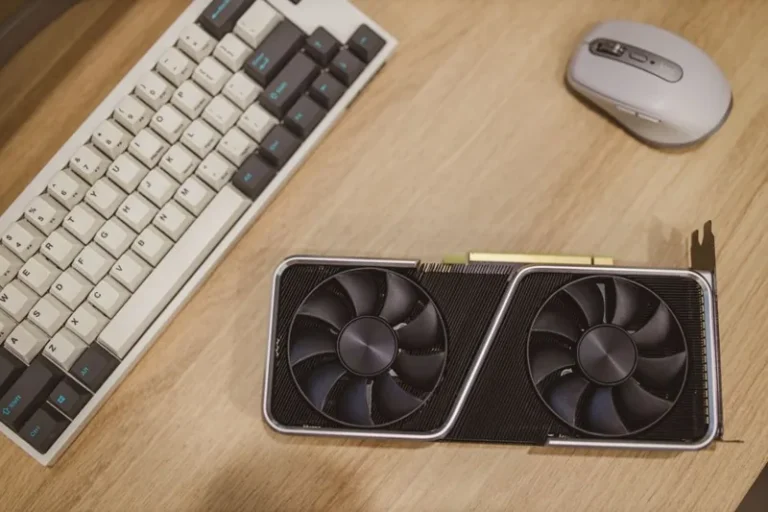
Priced around $449, the RTX 5060 Ti 16 GB is the safest best gpu under 500 pick. It handles 1440p at high settings in virtually every modern title, carries enough VRAM for the next several years, and includes DLSS 4 support, which is a genuine advantage in demanding games. If you want one card to set and forget, this is it.
Best Value: AMD Radeon RX 9060 XT
The RX 9060 XT, typically $399–$429, trades blows with the RTX 5060 Ti in rasterized performance while often costing less. AMD’s FSR has closed much of the gap with DLSS, and the card’s 16 GB of VRAM makes it a strong long-term buy for budget 1440p.
Best Budget: Intel Arc B580
At just $249, the Arc B580 is the value story of the generation. Its 12 GB of VRAM and surprisingly good 1440p capability embarrass cards that cost more. Ray tracing at this price is a bonus. Drivers are now solid, making it the default answer for a 1080p build on a strict budget.
Best for 4K on a Budget: AMD Radeon RX 7800 XT
As inventory lingers, the previous-generation RX 7800 XT can be found around $450 on sale, and its 16 GB of VRAM plus strong raster performance make it the most realistic entry point into comfortable 4K gaming in this price bracket.
GPU Under $500 Comparison Table
| Graphics Card | VRAM | Target Resolution | Approx. Price (USD) | Best For |
|---|---|---|---|---|
| Intel Arc B580 | 12 GB | 1080p / 1440p | $249 | Tightest budget |
| RTX 5060 (8 GB) | 8 GB | 1080p | $299 | Cheap entry |
| RX 7600 XT | 16 GB | 1080p / 1440p | $329 | VRAM on a budget |
| RTX 5060 Ti 16 GB | 16 GB | 1440p | $449 | Best overall |
| RX 9060 XT | 16 GB | 1440p | $399 | Best value |
| RX 7800 XT | 16 GB | 1440p / 4K | $450 | Entry 4K |
What to Avoid When Buying Under $500
A few traps routinely catch buyers in this range. First, avoid 8 GB cards for anything beyond 1080p — they are already hitting texture limitations in current games. Second, do not overpay for a “factory overclocked” version of a card when a stock card plus your own undervolt gets nearly the same result for less. Third, verify your power supply and case clearance before purchase; the best gpu under 500 still needs proper power delivery and physical space.
Also watch for cards that are only barely under $500 but deliver barely more than a card $100 cheaper. The gap between a $399 and a $499 GPU can be surprisingly small in practice.
Choosing by Your Monitor and Games
Your monitor decides more than the card itself. If you game on a 1080p 144 Hz screen, the $249–$329 cards are all you need, and anything more is future-proofing. If you are on a 1440p 144 Hz panel, step up to the $399–$449 tier. Only consider the RX 7800 XT for 4K or ultrawide.
For a fuller look at resolution-specific choices, see our best graphics card for 1440p gaming guide, and if raw frames-per-dollar is your obsession, read best gpu for gaming price to performance.
Ray Tracing, Upscaling, and Software in This Class
Raw raster performance is only half the story. The best gpu under 500 in 2026 must also deliver usable ray tracing and upscaling, because the heaviest modern titles lean on both. Nvidia’s DLSS 4 remains the most polished upscaler and is a big reason the RTX 5060 Ti punches above its price. AMD’s FSR has closed much of the gap and is broadly supported, while Intel’s XeSS keeps improving with each Arc driver update.
Ray tracing is where these tiers separate. An Arc B580 or RX 7600 XT can run light ray-traced reflections at 1080p but buckles under full path tracing. The RTX 5060 Ti and RX 9060 XT hold up far better, especially with upscaling enabled; expect playable frame rates with medium ray tracing at 1440p rather than maxed-out settings.
Software support matters as much as silicon. Nvidia’s driver suite is the most stable of the three, AMD’s Adrenalin software bundles capable built-in tuning tools, and Intel’s frequent driver cadence has matured into genuine reliability. For measured, up-to-date numbers across the entire stack, Tom’s Hardware maintains a GPU hierarchy that ranks every current card by performance, and PC Gamer’s best graphics cards guide adds real-world buying advice. Use both as a reality check before you commit, because a current 60-class card can quietly match a previous generation’s 70-class card for less money.
Finally, decide between current and previous-generation cards. As 2025 stock lingers, last-gen favorites such as the RX 7800 XT and RTX 4070 can dip under $500 on sale and often beat current mid-range cards in raw performance. The trade-off is shorter driver support and no access to the newest upscaling tricks, but if you are patient and buy from a reputable retailer with a valid warranty, a discounted last-gen card is frequently the smartest purchase in the entire bracket.
FAQ
Is $500 enough for a good gaming GPU?
Yes. The $400–$500 range comfortably handles 1440p gaming at high settings in 2026 and is arguably the best value point in the entire market.
What is the best GPU under $500 for 4K?
The AMD Radeon RX 7800 XT on sale is the most realistic 4K option in this bracket, though you will dial settings back in the heaviest titles. True 4K high-refresh generally wants a card above $500.
Should I buy an 8 GB or 16 GB card?
For 1440p and longevity, 16 GB is strongly preferred. Eight gigabytes is fine strictly for 1080p esports and lighter titles today, but it will age faster.
Nvidia, AMD, or Intel for a budget GPU?
Nvidia leads on DLSS and ray tracing, AMD leads on raw value and VRAM per dollar, and Intel leads at the sub-$300 end. All three make sensible choices depending on your price point.
Will a budget GPU bottleneck my PC?
Only if the rest of your system is much stronger. At 1080p, a budget GPU is often the correct balance. Our when to upgrade your graphics card guide shows how to check whether your GPU is the real limiter.
Conclusion
The best gpu under 500 in 2026 is the RTX 5060 Ti 16 GB for all-around 1440p performance, the RX 9060 XT for raw value, the Intel Arc B580 for budget 1080p, and the RX 7800 XT for entry-level 4K. Match the card to your monitor, favor 12–16 GB of VRAM, and avoid overpaying for minor factory boosts. Once you pick a card, make sure the rest of the rig keeps up — start with our best budget gaming pc build under 1000 for a balanced foundation.