RTX Best to Worst: Every Nvidia GeForce Card Ranked (2026)
Sorting the RTX best to worst is harder than it sounds in 2026, because Nvidia now has three generations of cards on the market at once. The current RTX 50 series sits at the top, the RTX 40 series still holds the middle of the pack as a strong used-market option, and leftover RTX 30 series cards fill out the budget end. Adding to the confusion, pricing has drifted so far from launch MSRPs that a raw performance ranking no longer tells the whole story.
This guide ranks every meaningful RTX card from best to worst, considering real-world gaming performance, features, and the value each card delivers at its current street price. Whether you are building a new PC or upgrading an old one, this RTX best to worst list will tell you exactly where your budget should land.
RTX Best to Worst: The Complete Ranking at a Glance
Here is the full RTX best to worst order for 2026, with each card’s target resolution, VRAM, and typical street price. The value column reflects how much gaming performance you get per dollar at current prices, not at launch MSRP.
| Rank | Card | VRAM | Target | Typical 2026 Price | Value |
|---|---|---|---|---|---|
| 1 | RTX 5090 | 32 GB GDDR7 | 4K / 8K | ~$2,300 | Flagship |
| 2 | RTX 4090 | 24 GB GDDR6X | 4K | ~$2,000 used | Strong used |
| 3 | RTX 5080 | 16 GB GDDR7 | 4K / 1440p | ~$1,400–$1,600 | Excellent |
| 4 | RTX 4080 Super | 16 GB GDDR6X | 4K | ~$1,100 used | Strong used |
| 5 | RTX 5070 Ti | 16 GB GDDR7 | 1440p / 4K | ~$900–$1,000 | Great |
| 6 | RTX 5070 | 12 GB GDDR7 | 1440p | ~$750–$830 | Great |
| 7 | RTX 4070 Ti Super | 16 GB GDDR6X | 1440p | ~$700 used | Good used |
| 8 | RTX 4070 Super | 12 GB GDDR6X | 1440p | ~$550 used | Good used |
| 9 | RTX 5060 Ti | 16 GB GDDR7 | 1080p / 1440p | ~$449 | Good |
| 10 | RTX 4070 | 12 GB GDDR6X | 1440p | ~$350–$450 used | Excellent used |
| 11 | RTX 5060 | 8 GB GDDR7 | 1080p | ~$299 | Good budget |
| 12 | RTX 4060 | 8 GB GDDR6 | 1080p | ~$250 used | Budget |
This table is the backbone of the RTX best to worst ranking. The key takeaway is that “best” and “most expensive” are not always the same thing. The RTX 4070 sits low on raw performance but ranks near the top on value because its used price has collapsed, while the RTX 5090 tops performance but delivers modest value for its enormous cost.
The Flagship Tier: RTX 5090, RTX 4090, and RTX 5080
At the very top of the RTX best to worst list are the cards built for 4K and beyond. The RTX 5090 is the current king, a 32 GB GDDR7 monster that pushes past 100 fps at 4K in nearly every title and even makes 8K gaming plausible with DLSS. It is also brutally expensive at roughly $2,300, which limits it to enthusiasts with deep pockets.
The RTX 4090 remains an absurdly capable card even one generation later. Its 24 GB of GDDR6X and enormous CUDA core count keep it within striking distance of the 5090 in pure rasterization, and clean used units around $2,000 are a genuinely strong buy for 4K gaming. If you want flagship power without the flagship tax, a used 4090 is the smartest money in this tier.
The RTX 5080 is the sensible high-end pick and arguably the best card in the entire RTX best to worst ranking for most 4K gamers. At $1,400 to $1,600 it delivers roughly 90 percent of the 5090’s real-world experience for well under half the price. It has 16 GB of GDDR7, DLSS 4 multi-frame generation, and runs cooler and quieter than its bigger sibling. For most people, this is the highest you should climb.
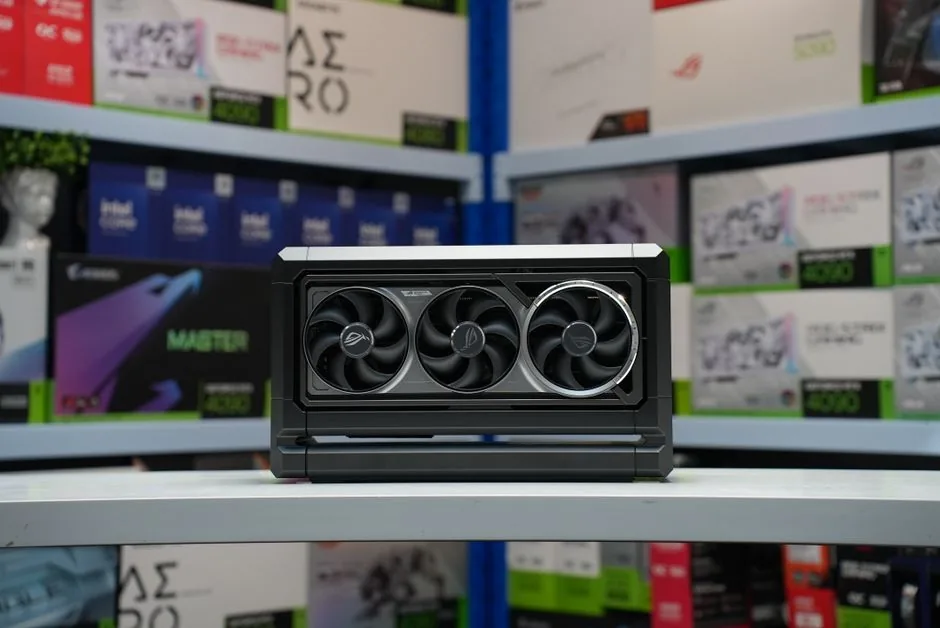
The Sweet Spot Tier: RTX 5070 Ti, RTX 5070, and RTX 4070 Super
The middle of the RTX best to worst order is where the best gaming value actually lives, and it is the tier most builders should focus on.
The RTX 5070 Ti is the standout here. Its 16 GB of GDDR7 gives it meaningful headroom for 1440p ultra and even 4K with upscaling, and at $900 to $1,000 it delivers flagship-adjacent performance at a fraction of the cost. If you want a card that will still feel fast in three years without spending flagship money, this is the pick.
The RTX 5070 is the volume seller and the card I recommend most often. It handles 1440p high-refresh gaming effortlessly and pulls far ahead of last generation once DLSS 4 enters the picture. At $750 to $830 it is not cheap, but it is the best all-rounder in the current lineup, and I break down its exact strengths in my best GPU for gaming price to performance guide.
The RTX 4070 Super occupies a fascinating slot as a used-market sweet spot. It delivers 1440p performance close to the RTX 5070 for around $550 used, which makes it one of the best frames-per-dollar cards available if you are comfortable buying secondhand. Its 12 GB of VRAM is the only real limitation for future titles.
The Budget Tier: RTX 5060 Ti, RTX 4070, RTX 5060, and RTX 4060
Near the bottom of the RTX best to worst list, the cards get cheaper but the tradeoffs grow. The RTX 5060 Ti is the best new budget option, offering 16 GB of GDDR7 and solid 1080p and 1440p performance at $449. It is the card to buy if you want a warranty and modern features on a tighter budget.
The RTX 4070 is the wildcard of this tier. On pure performance it sits modestly, but its used price of $350 to $450 makes it one of the best value cards in the entire ranking. It easily handles 1080p and most 1440p gaming, and it is a fantastic drop-in upgrade for older systems, as I explain in my when to upgrade your graphics card guide.
The RTX 5060 and RTX 4060 round out the bottom with 8 GB of VRAM each, which is increasingly a bottleneck for modern titles at high settings. They are fine for 1080p esports and older games, but their limited memory means they will age faster than anything above them. Only buy these if your budget genuinely cannot stretch to a 5060 Ti or a used 4070.
How to Use This Ranking to Pick Your Card
Reading an RTX best to worst list is one thing; using it is another. The right card for you depends on three things: your monitor’s resolution, your budget, and how long you plan to keep the card.
If you game at 1080p, you do not need to climb high on this list. A used RTX 4070 or a new RTX 5060 Ti will max out almost everything at that resolution. Spending more is mostly wasted unless you plan to move to a 1440p or 4K monitor soon.
If you game at 1440p, aim for the sweet spot tier. The RTX 5070 is the ideal new card, while a used 4070 Super or 4070 delivers nearly the same experience for less money. This is where the value sweet spot lives, and where most gamers should stop.
If you game at 4K, the RTX 5080 is the sensible ceiling, with the 5070 Ti as the entry point. Anything higher, and you are paying a large premium for incremental gains. For help pairing your GPU with the right monitor, see my best gaming monitor 2026 guide.
FAQ
What is the best RTX card in 2026?
The RTX 5090 is the fastest, but the RTX 5080 is the best all-rounder for most people. It delivers roughly 90 percent of the 5090’s real-world experience for well under half the price.
Where does the RTX 4070 rank in an RTX best to worst list?
Mid-pack on raw performance, but near the top on value. At $350 to $450 used, it is one of the best frames-per-dollar cards available in 2026.
What is the best budget RTX card?
The RTX 5060 Ti at $449 is the best new budget card, while a used RTX 4070 at $350 to $450 is the best overall budget value.
Is the RTX 5090 worth the money?
Only if you game at 4K or 8K and money is no object. For everyone else, the RTX 5080 or 5070 Ti delivers a far better experience per dollar.
How much VRAM do I need for gaming in 2026?
12 GB is the comfortable minimum for 1440p, and 16 GB is ideal for 4K and future titles. Budget cards with 8 GB are already showing their limits.
Conclusion
This RTX best to worst ranking is designed to be more than a list of big numbers. It is a guide to spending your money well. The raw hierarchy runs from the RTX 5090 at the top down to the RTX 4060 at the bottom, but the smart buying decisions live in the middle, where the RTX 5080, 5070 Ti, 5070, and used 4070 deliver outstanding performance for the price.
Match your card to your resolution and budget, and the RTX best to worst question settles itself. Most gamers will be happiest in the sweet spot tier, paired with a good power supply and enough RAM. For deeper benchmarks on every card in this list, check Tom’s Hardware and PC Gamer, then buy the card that wins at your resolution, not just the one with the biggest number.