Gaming PC Build With Used Parts: A Complete 2026 Guide
A gaming PC build with used parts is the single fastest way to get 1440p or even 4K performance without paying full retail. In 2026 the used market is deeper than ever, because early adopters keep dumping RTX 40-series and RX 7000-series cards to chase the newest flagships, and that inventory flows straight into your hands at a steep discount. The catch is that buying secondhand means accepting a little risk in exchange for serious savings — often 30 to 50 percent off new prices. This guide walks through every step of a gaming PC build with used parts, from which components are safe to buy used to where to find them and how to validate them before you hand over your money. By the end you will have a concrete parts list, a realistic budget, and a testing checklist that turns the gamble into a calculated win.
Why a Gaming PC Build With Used Parts Beats Buying New
The economics have only gotten sharper. A used GeForce RTX 3080 that sold for $699 at launch regularly trades around $380 to $420 today, yet it still pushes well past 100 fps at 1440p in most current titles. A used Ryzen 7 5800X3D often lands under $220 and remains one of the best gaming CPUs we have benchmarked, because its 3D V-Cache hides memory latency so well. New equivalents at those price points simply do not exist.
The savings stack across the whole system. Cases, air coolers, power supplies, and RAM barely degrade with age, and they are the components people upgrade away from most often. That means you can frequently pick up a premium 80 Plus Gold power supply or a high-end case for half its store price. Even storage is fair game if you verify drive health first, though we generally suggest buying a new NVMe drive for the boot disk and keeping used drives for bulk game storage.
What Used Parts Are Safe to Buy — and What to Skip
Not every secondhand component is equally safe, and the difference is the whole ballgame for a gaming PC build with used parts. Here is how we split the market:
- Great to buy used: graphics cards, CPUs, RAM, cases, air coolers, and power supplies under warranty.
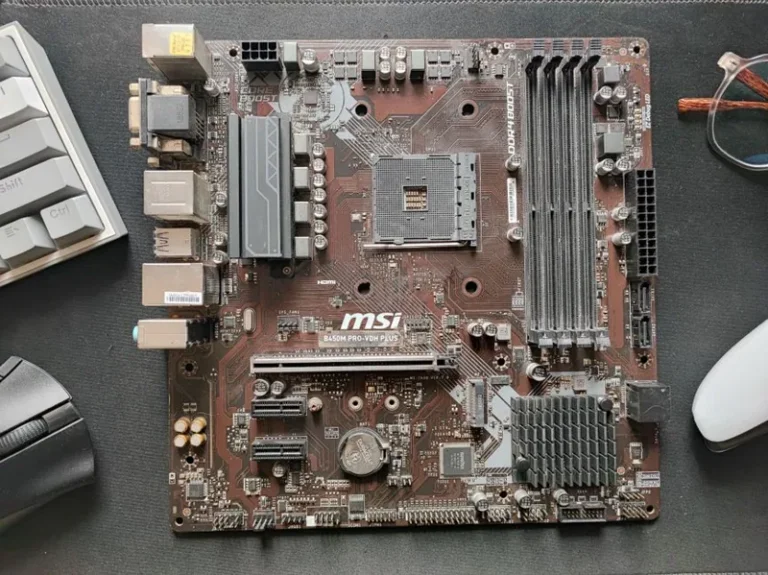
- Okay with testing: motherboards, monitors, and mechanical keyboards.
- Better to buy new: liquid AIO coolers, hard drives, and heavily worn SSDs.
Graphics cards are the big prize. Most used GPUs are operationally fine, especially if the seller kept the original box and cleaned the cooler. The risk is a card that was mined on 24/7 or one with failing fan bearings. CPUs are nearly impossible to damage through normal use, which makes them the safest high-value purchase in the entire used market.
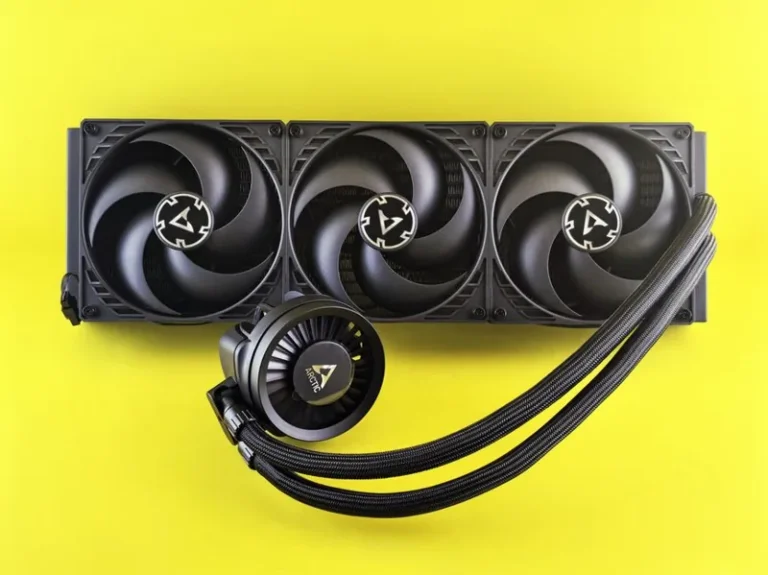
Try to avoid used AIO liquid coolers. Pump failure is silent and gradual, and once the fluid permeates, cooling collapses. The roughly $30 to $60 you save is not worth the risk of a dead loop. Hard drives should always be new, because their failure rate climbs sharply with age and power-on hours.
Setting a Realistic Budget for a Used Build
A tight, sensible used build lands around $600 to $800 for smooth 1080p gaming, $900 to $1,200 for a strong 1440p machine, and $1,400 to $1,800 for a 4K-capable rig. The sweet spot for most people in 2026 is the 1440p tier, because that is where used parts deliver the biggest gap over buying new.
Keep in mind that power supply and case prices are fairly flat whether new or used, so factor those in at near-retail. The components where used savings are huge — GPU, CPU, motherboard, and RAM — should carry most of your budget reduction. If you are working with a hard ceiling, our best budget gaming PC build under $1,000 guide shows how far you can stretch a fixed dollar amount.
The $950 Used 1440p Parts List
This table shows a complete gaming PC build with used parts that targets high-refresh 1440p. Prices reflect late-2026 used-market averages in USD and assume patient shopping.
| Component | Pick | Used Price (USD) | New Price (USD) |
|---|---|---|---|
| CPU | AMD Ryzen 7 5800X3D | $210 | $320 |
| GPU | Nvidia RTX 3080 10GB | $400 | — |
| Motherboard | B550 ATX (any reputable) | $95 | $140 |
| RAM | 32GB DDR4-3600 CL16 | $70 | $95 |
| NVMe SSD (new) | 1TB Gen4 | $75 | $75 |
| PSU (new) | 750W 80+ Gold | $95 | $95 |
| Case | ATX mid-tower, mesh front | $55 | $90 |
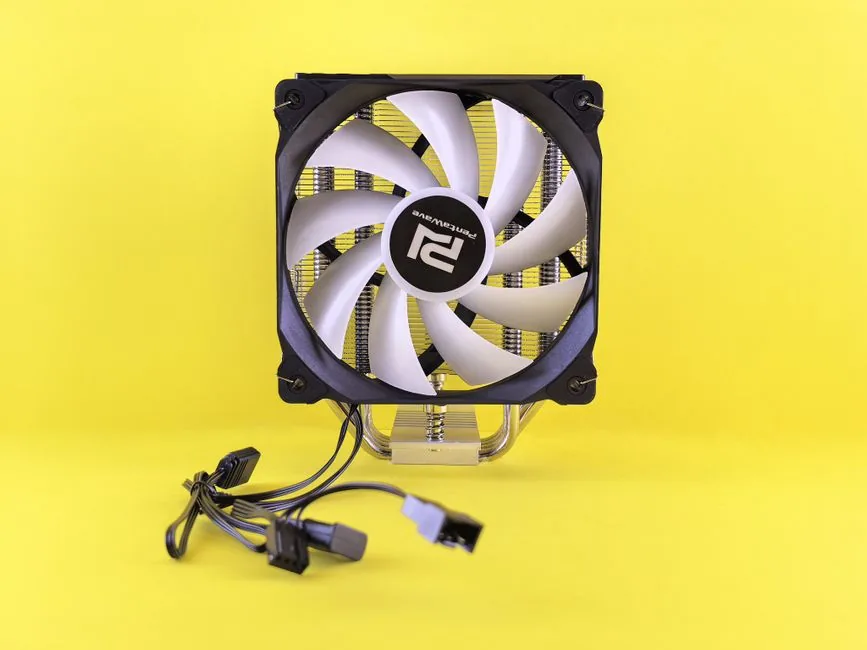
| Air Cooler | Peerless Assassin-class | $35 | $45 |
| Total | $1,035 | $1,260+ |
The table shows roughly $225 of immediate savings, and you can trim further by dropping to a Ryzen 5 5600 and an RTX 3070 if 1080p high-refresh is your only target. For a reality check on where that money goes in a brand-new system, see our breakdown of how much it costs to build a gaming PC.
Where to Find the Best Used Parts
The most reliable channels have buyer protection built in. eBay remains the largest single source, and its money-back guarantee means a card that shows up dead is a refund, not a loss. Facebook Marketplace and local classifieds are where you find the best cash deals, but you sacrifice the ability to return an item, so test on the spot or bring a friend who knows the hardware.
Subreddits like r/hardwareswap are excellent for enthusiasts flipping gear, and many sellers are happy to run a quick benchmark or provide timestamps on demand. Refurbished offerings from Zotac, EVGA, and manufacturer outlets frequently carry a short warranty, which de-risks the GPU purchase more than anything else. For independent buying advice, PC Gamer’s used hardware guide covers the same channels in more depth.
Whatever channel you choose, insist on clear photos, a serial number, and some proof the part boots. Sellers who refuse those basics rarely offer a fair deal.
How to Test Used Parts Before You Commit
A few minutes of verification separates a bargain from a brick, and this is where a gaming PC build with used parts lives or dies. For graphics cards, ask the seller to run a quick benchmark such as 3DMark Time Spy or FurMark for five minutes and confirm temperatures stay under 85°C. Screenshots with a timestamp work if you cannot meet in person. Tom’s Hardware publishes reference temperature and benchmark data so you know what a healthy card should score.
For CPUs and motherboards, request a photo of the system posting to BIOS showing the correct model and core count. On RAM, run a single pass of MemTest86 to catch bad sticks. On storage, pull the SMART data and check for high power-on hours, reallocated sectors, and any media errors. These checks cost a few minutes but eliminate the vast majority of defective parts before they reach your desk.
Assembling and Stress-Testing the Finished Build
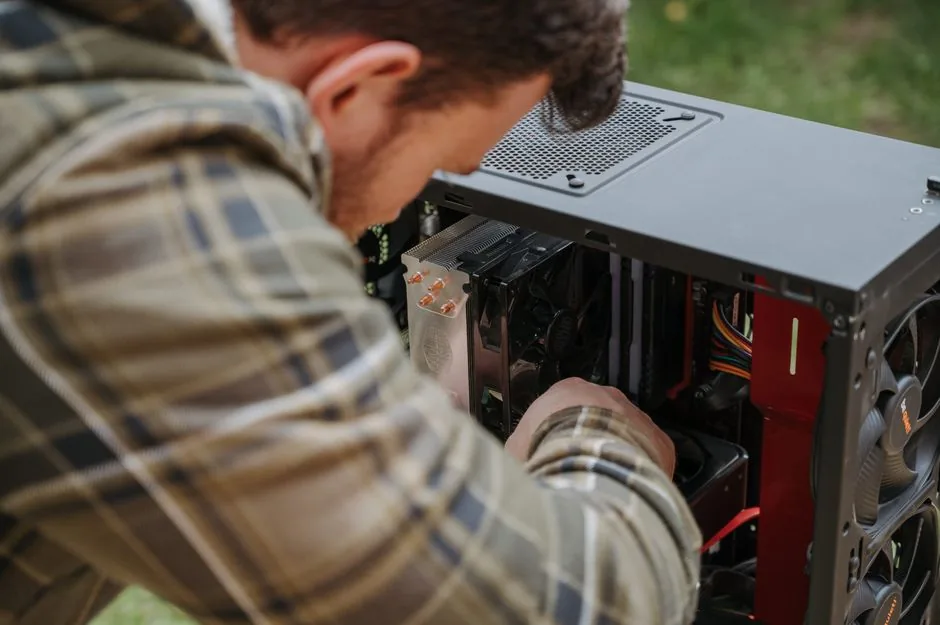
Assembly is identical to a new build — the only difference is you want to be slightly more careful removing dust and repasting the CPU cooler. Give the GPU a gentle blast of compressed air and, if fan noise is bad, budget $15 for replacement fans. Once the system posts, run a full stress-test loop: 3DMark running alongside Prime95 for 30 minutes to reveal any instability that a quick boot would miss.
Monitor temperatures and listen for coil whine or failing fan bearings during the test. If a used power supply is in the mix, check the 12V rail readings in software to confirm stable voltage. After a clean pass, update the BIOS and drivers, enable XMP, and you are ready to game. To confirm the card is delivering what it should, cross-reference our best GPU for gaming price-to-performance rankings and our best graphics card for gaming roundup.
FAQ
Is a gaming PC build with used parts worth the risk in 2026?
For most people, yes. GPUs and CPUs carry the largest savings, and buying from a channel with buyer protection, or testing before purchase, removes most of the downside.
What one used part gives the biggest bang for the buck?
The GPU, without question. A used RTX 3080 at around $400 delivers near-4K performance that would otherwise cost double or more new.
Should I buy a used power supply?
Only if it is a well-reviewed model still under warranty. A failing PSU can damage other components, so this is one area where a new unit is often worth the small premium.
Where is the safest place to buy used parts?
eBay is the safest overall thanks to buyer protection. r/hardwareswap is great for enthusiasts, and manufacturer refurb outlets add a warranty layer for GPUs.
Do I need to reapply thermal paste on a used CPU?
Yes. Old paste dries out, and a fresh application improves thermals noticeably on both the CPU and any used GPU you choose to repaste.
Build Smart, Save Big
A gaming PC build with used parts is the most cost-effective route to serious frame rates in 2026, provided you shop the safe categories and test before you pay. Stick to used GPUs, CPUs, RAM, and boards, pair them with a new SSD and PSU, and you can out-spec a prebuilt at a fraction of the cost. Check our breakdown of how much it costs to build a gaming PC, or dive into the best GPU for gaming price-to-performance rankings to lock in your final component list.