RTX 5070 vs 4070 Super: Which GPU Should You Buy in 2026?
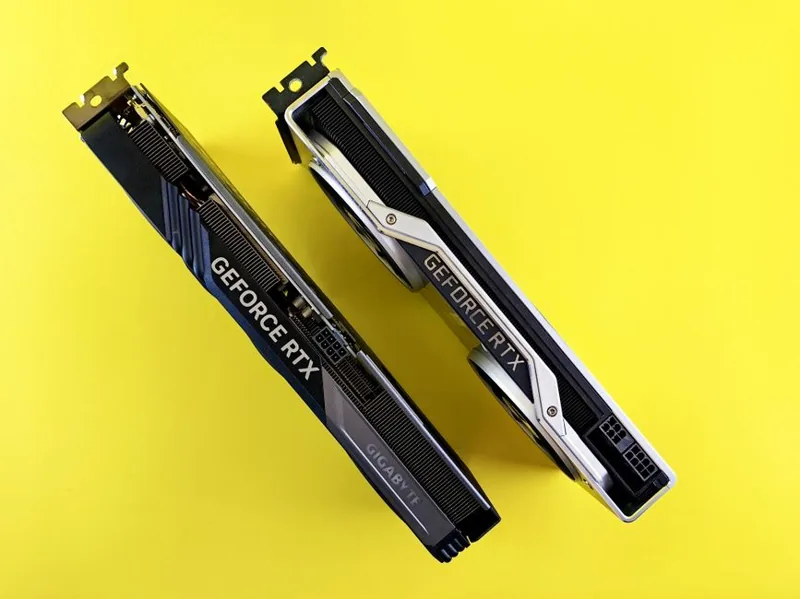
The RTX 5070 vs 4070 Super comparison is one of the most useful GPU head-to-heads you can make right now, because the two cards represent the same tier across two generations. The RTX 4070 Super was the mid-range king of the Ada generation, and the RTX 5070 is its direct Blackwell successor. On paper they look close, and in some games they are close. But the gap between them in features, memory performance, and longevity is bigger than the spec sheet suggests.
Here is the short version of the RTX 5070 vs 4070 Super story. The RTX 5070 is faster in ray-traced titles and holds a meaningful lead in memory bandwidth thanks to GDDR7, but the 4070 Super has become a very strong used-market value in 2026. The right choice depends on whether you are buying new, buying used, or deciding whether an upgrade is actually worth it.
RTX 5070 vs 4070 Super: Specs at a Glance
The two cards are remarkably close in raw CUDA core count, which is where the confusion begins. The differences show up in memory type, bandwidth, and the feature set.
| Spec | GeForce RTX 5070 | GeForce RTX 4070 Super |
|---|---|---|
| Architecture | Blackwell (GB205) | Ada Lovelace (AD104) |
| CUDA Cores | 6,144 | 7,168 |
| VRAM | 12 GB GDDR7 | 12 GB GDDR6X |
| Memory Bus | 192-bit | 192-bit |
| Memory Bandwidth | 672 GB/s | 504 GB/s |
| TDP | 250 W | 220 W |
| Launch MSRP | $549 | $599 |
| 2026 Typical Price | ~$750–$830 new | ~$420–$520 used |
| DLSS Generation | DLSS 4 (multi-frame) | DLSS 3 (single-frame) |
The surprise in any RTX 5070 vs 4070 Super spec comparison is that the 4070 Super actually has more CUDA cores. The 5070 wins anyway because its GDDR7 memory delivers about 33 percent more bandwidth, and Blackwell’s RT and tensor cores are significantly stronger per-core. This is why raw core count has become a poor predictor of real-world performance.
RTX 5070 vs 4070 Super: Benchmark Performance
Across a mixed suite of 2026 titles at 1440p, the RTX 5070 averages roughly 10 to 15 percent faster than the RTX 4070 Super in pure rasterization. That is a modest generational step. The story changes once ray tracing and upscaling enter the picture, where the the 5070 can pull 25 percent or more ahead in heavy workloads.
At 1080p, this RTX 5070 vs 4070 Super matchup is nearly a tie. Both cards are fast enough that your CPU becomes the limiting factor in almost every title, and the practical difference in competitive games is invisible. If you plan to stay at 1080p, neither card should be chosen over the other for raw speed alone.
At 1440p, the 5070 earns its price premium. It holds better one-percent lows and stays above 60 fps in demanding ray-traced games where the 4070 Super can occasionally dip under it. At 4K, neither card is a true 4K card, but the 5070 becomes playable in more titles with DLSS Quality or Balanced enabled, especially in games that support multi-frame generation.
DLSS 4 Is the Real Difference Maker
The most important difference in the RTX 5070 vs 4070 Super decision is DLSS 4. Multi-frame generation is exclusive to the RTX 50 series, and it is the single strongest reason to choose the 5070 over the 4070 Super. Where the 4070 Super tops out at single-frame generation with DLSS 3, the 5070 can generate multiple frames per rendered frame, which can more than double the displayed frame rate in supported games.
This matters most in heavy ray-traced titles. In Cyberpunk 2077 with path tracing enabled, an RTX 5070 with DLSS 4 produces a dramatically smoother experience than a 4070 Super with DLSS 3. If you play modern single-player games and want ray tracing on, that feature alone can justify the price difference.
On the raster side, both cards share the same core features. Both support AV1 encoding for streaming and recording, both sit in the same driver ecosystem, and both handle productivity workloads competently. The 4070 Super is not missing anything critical for raw gaming performance; it simply lacks the newest generation of upscaling and frame-generation technology.
Power, Thermals, and Build Considerations
The 5070 draws 250 W versus the 4070 Super’s 220 W, a modest difference. The practical impact shows up in power supply requirements. A 4070 Super is comfortable on a 650 W unit, while a 5070 wants 700 W to 750 W for comfortable headroom, especially on board-partner models that push power limits higher.
Both cards run cool with modern cooler designs and neither is a particularly hot or loud card in a well-ventilated case. The 4070 Super holds a slight efficiency edge, which matters if you are building in a small-form-factor chassis with limited airflow. If your current power supply is 650 W or below, factoring a PSU upgrade into the cost of the 5070 is a fair part of the decision.
Price and Value: New vs Used Changes the Math
This is where the RTX 5070 vs 4070 Super comparison gets genuinely interesting. The 4070 Super has been discontinued, so new stock is scarce and overpriced, but clean used cards routinely sell for $420 to $520. The RTX 5070 launched at a $549 MSRP, but 2026 street pricing has drifted upward, with new units commonly listed between $750 and $830.
That price spread flips the value equation. A used 4070 Super at $480 versus a new 5070 at $790 is not an equivalent-dollar comparison. For a gamer chasing frames per dollar today, the used 4070 Super is often the sharper buy, and this is exactly the kind of tradeoff I explore in my best gpu for gaming price to performance guide.
The counter-argument is warranty and longevity. A new 5070 carries a full warranty, current driver focus, and DLSS 4, which will age better over the next few years. A used 4070 Super is a value play with genuine risk attached. For someone who does not want to touch the used market, the 5070 is the clear recommendation; for a budget builder comfortable with used parts, the 4070 Super is worth a hard look.
Should You Upgrade From a 4070 Super to a 5070?
The short version of this RTX 5070 vs 4070 Super question depends entirely on your starting point. If you already own a 4070 Super, the 5070 is not a compelling upgrade for most people. You would be paying $750 or more for roughly 10 to 15 percent more raster performance, which is hard to notice outside a frame counter. The one exception is ray-traced gaming where DLSS 4 multi-frame generation delivers a visible leap.
If you are choosing between the two for a fresh build or a new GPU, the answer splits by budget and risk tolerance. Buying new, the 5070 is the better card and the better long-term investment. Buying used, the 4070 Super offers exceptional value. If you are still on an RTX 3060 or older, both cards represent a major step up, though I would lean toward the newer 5070 for the feature headroom; my when to upgrade your graphics card guide walks through the timing question in detail.
FAQ
Is the RTX 5070 faster than the RTX 4070 Super?
Yes. The RTX 5070 is roughly 10 to 15 percent faster in rasterization and 25 percent or more faster in ray-traced titles when DLSS 4 multi-frame generation is enabled.
Which has more CUDA cores, the RTX 5070 or 4070 Super?
The RTX 4070 Super has more, at 7,168 versus 6,144. The 5070 still wins on performance because of faster GDDR7 memory and stronger Blackwell ray-tracing cores.
Is the RTX 4070 Super worth buying in 2026?
Yes, on the used market. At $420 to $520 for a clean card, it delivers excellent 1440p value. Avoid scarce, overpriced new stock, which is discontinued.
What power supply does the RTX 5070 require?
A 700 W to 750 W unit is recommended for the RTX 5070. The 4070 Super is comfortable on 650 W.
Does the RTX 5070 support DLSS 4?
Yes. DLSS 4 with multi-frame generation is exclusive to the RTX 50 series and is the strongest reason to choose the 5070 over the 4070 Super.
Conclusion
The RTX 5070 vs 4070 Super matchup is not the clean generational blowout it might look like on a spec sheet. The 5070 is the better card: it has faster memory, stronger ray tracing, and DLSS 4 multi-frame generation that will keep it relevant longer. At its launch price, it was an easy recommendation. But 2026 pricing has shifted the equation, with new 5070s selling above MSRP while clean 4070 Supers flood the used market at tempting prices.
Match the card to your situation. If you are buying new and want maximum longevity, buy the 5070. If you want the best frames per dollar and are comfortable with used hardware, the 4070 Super is a superb value. Check current independent numbers from Tom’s Hardware and the official specs on Nvidia’s comparison page before you commit, and buy the card that wins at your resolution and your budget.