Handheld Gaming PC Battery Life: What to Expect in 2026
Handheld gaming PC battery life is the number one compromise of the category. These pocketable machines pack laptop-class performance into a device you hold in your palms, and every watt of power comes straight out of a battery that is not getting any bigger.
Realistically, most handheld gaming PCs last somewhere between 1.5 and 8 hours on a charge, with the exact figure swinging wildly depending on what you are playing and how the device is configured. This guide breaks down real-world handheld gaming PC battery life, what drains it fastest, and how to get more playtime out of every charge.
How Long Do Handheld Gaming PCs Actually Last?
Manufacturers love to quote a peak number, but the useful figure is what you get mid-game. Here is a realistic picture of handheld gaming PC battery life across the most popular devices in 2026.
| Device | Light games (2D / indie) | AAA games | Heavy AAA at max TDP |
|---|---|---|---|
| Steam Deck OLED | 5–8 hours | 2–3 hours | ~1.5 hours |
| ASUS ROG Ally X | 4–7 hours | 2–3.5 hours | ~1.5 hours |
| Lenovo Legion Go | 4–6 hours | 1.5–2.5 hours | ~1 hour |
| MSI Claw 8 AI+ | 5–7 hours | 2–3 hours | ~1.5 hours |
The pattern is consistent: lightweight 2D games and emulation stretch handheld gaming pc battery life to a full afternoon, while demanding 3D titles at maximum performance settings can drain even the best devices in around 90 minutes.
What Drains Handheld Gaming PC Battery Life Fastest
Understanding what eats the battery makes it much easier to engineer longer play sessions.
Graphics Intensity and Resolution
The single biggest factor is how hard the GPU works. Pushing a 3D game at a high resolution and uncapped frame rate forces the chip to run near its limit, and battery drains accordingly. Capping the frame rate to 30 or 40 FPS is the fastest lever you can pull.
Screen Brightness
The display is a constant, surprisingly large draw. Dropping brightness from maximum to around 60 percent can add 30 minutes or more to handheld gaming pc battery life, especially on the bright, high-res panels in devices like the Legion Go.
TDP and Performance Mode
Every handheld lets you trade performance for battery. Lowering the TDP — the power budget of the chip — from a “turbo” 30 watts down to a “quiet” or “steam” 10–15 watts nearly doubles runtime in many games while still keeping them playable.
Wi-Fi, Bluetooth, and Background Tasks
Streaming from the cloud or downloading in the background burns power. For a truly long session, play locally downloaded titles and turn off Bluetooth when you are not using wireless headphones.
How to Make Handheld Gaming PC Battery Life Last Longer
A few settings changes can add real time without hurting the experience much.
Cap the Frame Rate and Resolution
Locking to 30 or 40 FPS and dropping the render resolution a notch eases the load on the GPU dramatically. Most games remain perfectly smooth at 40 FPS on a handheld scale, and you will often notice the battery gains far more than the visual difference.
Use a Lower TDP Profile
Switch to a conservative power profile for less demanding games. A 10-watt mode is plenty for indies and older titles, and it roughly doubles handheld gaming pc battery life compared to running flat out.
Brightness, Volume, and Connectivity
Turn screen brightness down to where it is comfortable, not maximum, and prefer wired or low-power headphones. Keeping the device in airplane mode while playing offline titles also trims background drain.
FSR and Upscaling Help Too
Enabling AMD FSR or Intel XeSS upscaling lets the game render at a lower resolution internally and upscale, reducing GPU load and heat while keeping the image sharp. It is one of the most effective ways to extend handheld gaming pc battery life without giving up visual quality.
Handheld Battery Life vs a Desktop or Laptop
It is worth putting handheld gaming pc battery life into perspective against its bigger siblings, because the physics are unforgiving.
| Form factor | Typical gaming session | Why |
|---|---|---|
| Handheld PC | 1.5–8 hours | Tiny battery, small screen |
| Gaming laptop | 1–4 hours unplugged | Bigger battery, but far more power draw |
| Desktop PC | Unlimited (plugged in) | No battery at all |
A handheld uses less total power than a gaming laptop, but its battery is a fraction of the size, which is why the numbers end up similar. If maximum uptime is the goal and portability is negotiable, a gaming PC build with a large monitor offers unlimited playtime at home. If you want a deeper look at the handheld versus desktop trade-off, our guide on how much it costs to build a gaming PC helps you compare budgets.
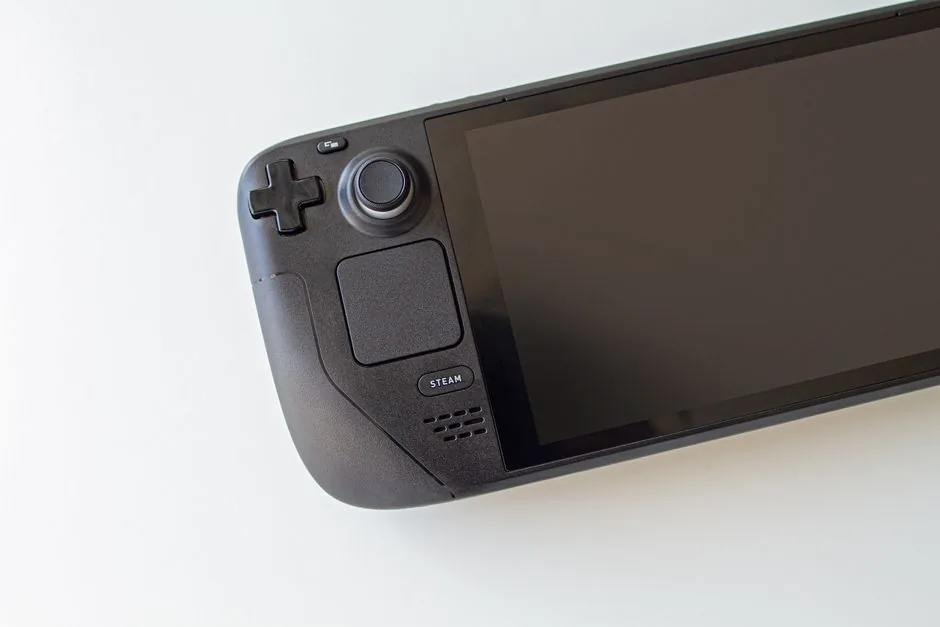
For current, model-specific battery testing, the reviewers at Tom’s Guide and PC Gamer publish detailed rundown and run-time benchmarks for each new handheld release.
How to Check Your Handheld’s Battery Health
Most handheld gaming PCs include a battery health readout somewhere in their software, and checking it every few months goes a long way toward keeping handheld gaming pc battery life where it should be.
Where to Find It
On the Steam Deck, desktop mode exposes battery information in the system settings, and community tools can surface the design capacity versus the current maximum. On Windows handhelds like the ROG Ally and Legion Go, the built-in powercfg command generates a battery report that shows the design capacity and the last full charge, so you can spot any degradation at a glance.
When to Service or Replace the Battery
Lithium batteries naturally lose a little capacity each year. When a handheld’s maximum charge has fallen below roughly 80 percent of its original design capacity, you will notice noticeably shorter sessions and should consider a replacement. On devices where the battery is serviceable, a fresh cell restores most of the lost handheld gaming pc battery life. For sealed models, a service center is the safer route than a risky DIY teardown.
Charging Tips for Handheld Gaming PCs
- Use the included fast charger; third-party chargers often charge slower than the device supports.
- Consider a portable power bank rated for 45 W to 65 W USB-C output for charging on the go.
- Avoid deep-draining the battery to zero too often; modern lithium cells prefer staying between 20 and 80 percent.
A couple of software habits help as well. Update the device firmware when new versions appear, since makers regularly ship fixes that trim idle power draw, and enable a charge limiter if one is offered so that heavy docked use does not force the battery to sit at 100 percent around the clock.
Related Guides
FAQ
How long does a handheld gaming PC last on one charge?
It depends heavily on the game. Light 2D and indie titles can run 5 to 8 hours, while demanding AAA games at maximum settings drain most devices in about 1.5 to 3 hours.
Which handheld gaming PC has the best battery life?
The Steam Deck OLED is widely considered the battery-life leader for lighter games, while the ASUS ROG Ally X offers the largest battery in a Windows handheld, giving it strong runtimes in demanding titles too.
Do handheld gaming PCs lose battery when plugged in?
No. When plugged into a sufficient charger, they run off wall power and continue charging, so you can play indefinitely without draining the battery further.
Can I extend handheld gaming pc battery life with a power bank?
Yes. A USB-C power bank rated for at least 45 W, ideally 65 W or more, can effectively double or triple your playtime away from an outlet.
Does lowering brightness really help battery life?
Yes, noticeably. The display is a major power draw, so dropping from maximum to around 60 percent brightness usually adds 30 minutes or more to handheld gaming pc battery life.
Conclusion
Handheld gaming PC battery life is fundamentally about managing expectations and settings. Accept that heavy AAA gaming will always hover around 1.5 to 3 hours, then lean on frame caps, lower TDP modes, and upscaling to stretch lighter games into a full afternoon of play. Tune your settings once, and every charge will go noticeably further.
If you are still deciding between a handheld and a more powerful home setup, our best gaming PC build for 2026 guide walks you through what an equivalent desktop would cost and deliver.